
Cyberbullying Awareness: Meaning, Effects, and Stay Safe Online

Have you ever seen someone being insulted, embarrassed, or threatened online and wondered how it could affect them? In today’s digital world, hurtful behavior can quickly move from a private message to a public post that many people can see and share. This is one reason cyberbullying is an important online safety issue for teenagers.
Cyberbullying is bullying or harmful behavior that takes place through digital devices and online platforms such as smartphones, social media, messaging apps, online games, forums, and email. It can involve posting or sending hurtful content, spreading rumors, sharing private information without permission, impersonating someone, or using technology to embarrass or threaten another person.
Unlike a face-to-face argument, harmful online content can sometimes be difficult to escape because messages, posts, screenshots, and other content can continue to circulate. This can make cyberbullying especially stressful for the person experiencing it.
Understanding cyberbullying awareness, recognizing warning signs, and knowing what to do can help teenagers respond more safely and confidently.
For more information about cyberbullying and prevention, you can also explore the official guidance from StopBullying.gov.
What Is Cyberbullying?
Cyberbullying Meaning
Cyberbullying is a form of bullying that happens through digital devices or online communication. It can take place through social media, text messages, direct messages, online gaming communities, forums, email, and other digital platforms.
Examples may include repeatedly sending hurtful messages, spreading embarrassing rumors, sharing someone’s private information without permission, creating a fake account to impersonate someone, or posting content designed to humiliate another person.
Cyberbullying can sometimes be connected to offline bullying as well. A situation that begins at school, for example, may continue through group chats or social media after school.
Building cyberbullying awareness can help teenagers recognize harmful online behavior and understand when an online situation needs attention or support.
How Is Cyberbullying Different From a Normal Argument?
Not every disagreement online is cyberbullying.
Friends may disagree, people may have different opinions, and misunderstandings can happen in chats or comments. Cyberbullying involves harmful behavior that goes beyond an ordinary disagreement and can include intimidation, humiliation, harassment, or repeated harmful actions.
A useful question to ask is whether the online behavior is causing harm and whether there is a pattern or possibility of the behavior continuing or spreading.
Examples of Cyberbullying
Common Forms of Cyberbullying
Cyberbullying can happen in many different ways. Some common examples include:
- Hurtful messages: Sending repeated insulting, threatening, or cruel messages to someone.
- Rumor spreading: Sharing false or embarrassing information about another person online.
- Sharing private information: Posting someone’s personal information, photos, or videos without permission.
- Impersonation: Creating a fake account or pretending to be someone else to embarrass or harm them.
- Public humiliation: Posting embarrassing content about someone where other people can see or share it.
- Online exclusion: Deliberately leaving someone out of online groups or conversations to make them feel isolated.
- Harassing comments: Repeatedly posting hurtful or hateful comments on someone’s social media account.
- Gaming harassment: Using online games, chats, or gaming communities to insult, threaten, or repeatedly target another player.
These behaviors can happen across social media, messaging apps, gaming platforms, forums, and other online spaces.
Why Does Cyberbullying Happen?
Main Reasons
There is no single reason why someone may engage in cyberbullying. Different situations can involve different social, emotional, or personal factors.
Some possible factors include:
- Wanting attention or reactions from others
- Anger or frustration
- Jealousy or conflict between people
- Peer pressure
- Wanting to appear powerful or popular
- A lack of understanding about the consequences of online behavior
- Feeling less responsible because of online anonymity
Anonymity can sometimes make people feel separated from the person on the other side of the screen. However, being behind a username or screen does not remove responsibility for harmful behavior.
Understanding why cyberbullying happens does not excuse it. The person experiencing the behavior is not responsible for someone else’s decision to bully or harass them.
Cyberbullying awareness also helps people understand that online actions can have real effects on others and that being behind a screen does not remove responsibility.
Effects of Cyberbullying
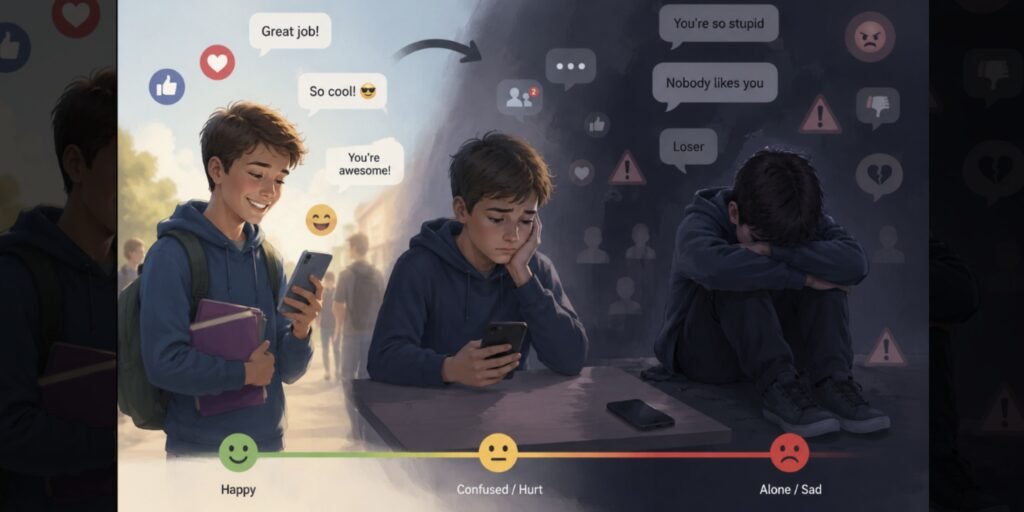
How Cyberbullying Can Affect Someone
Cyberbullying can affect a person’s emotions, relationships, school life, and everyday activities.
Someone experiencing cyberbullying may feel:
- Stressed or worried
- Embarrassed or upset
- Less confident
- Distracted or unable to concentrate
- Isolated from friends
- Less interested in activities they normally enjoy
- Concerned about checking messages or social media
For some teenagers, ongoing online harassment can also interfere with sleep, concentration, and school performance.
The effects are not exactly the same for everyone. Some people may show obvious changes in their behavior, while others may try to hide what is happening.
Cyberbullying can also affect a person’s online reputation because content shared online may be viewed, copied, or forwarded by other people.
How to Deal With Cyberbullying
What to Do If You Experience Cyberbullying
If someone is targeting you online, you do not have to deal with the situation alone. Taking calm, practical steps can help protect you and preserve useful evidence.
1. Do Not Respond Angrily
Avoid sending an angry reply or getting into a long argument. A heated response can sometimes make the situation worse.
If you need time to think, step away from the device and talk to someone you trust.
2. Save the Evidence
Keep screenshots or other records of harmful messages, posts, usernames, dates, and other relevant information.
Do not forward hurtful content to other people just for entertainment or attention. Keep evidence safely so it can be used when reporting the situation. Official guidance also recommends documenting cyberbullying and keeping screenshots or other records.
3. Block the Person
Use the platform’s blocking tools to stop unwanted messages or interactions.
Blocking does not mean you are being rude. It is a practical way to create distance from someone who is behaving harmfully.
4. Report the Content
Most social media platforms and online services provide reporting tools. Use the platform’s report feature when someone is sending harmful messages, posting inappropriate content, or violating its rules.
If the situation involves serious threats or potentially illegal behavior, tell a trusted adult and seek appropriate local help.
5. Tell a Trusted Adult
Talking to a parent, teacher, school counselor, or another trusted adult can make it easier to decide what to do next.
You do not need to figure everything out by yourself. A trusted adult can help you document the situation, report it, and decide whether your school or another organization should become involved.
6. Protect Your Account
Review your privacy and security settings. Consider limiting who can message you, comment on your posts, or view your personal information.
You can also learn more practical internet safety habits in our guide on How to Browse the Internet Safely.
How to Stay Safe From Cyberbullying

Prevention Tips for Teens
You cannot control everything other people do online, but you can take steps to protect your privacy and reduce unnecessary risks. Cyberbullying awareness is an important part of online safety because it helps teenagers recognize risky behavior and make safer choices.
Keep personal information private
Avoid publicly sharing details such as your home address, passwords, private phone numbers, or other sensitive information.
Use strong account security
Create strong, unique passwords and use available security features such as two-step verification.
Check privacy settings
Review who can see your posts, contact you, comment on your content, or add you to groups.
Think before posting
Before sharing a photo, video, comment, or personal detail, consider who might see it and whether you would be comfortable if it were shared more widely.
Be careful with screenshots
Remember that private messages and images can sometimes be copied or shared without your knowledge.
Choose respectful communication
Do not join in when other people are insulting or embarrassing someone online. Liking, sharing, or forwarding harmful content can increase the audience and make the situation worse.
For more practical tips, read our complete guide to Internet Safety Rules.
Role of Parents and Teachers

How Adults Can Help
Parents and teachers can play an important role in helping teenagers deal with cyberbullying.
Open communication is especially important. Teenagers may hesitate to talk about online problems because they are worried about being blamed, losing access to their devices, or making the situation worse.
Adults can help by listening calmly, asking questions, and avoiding immediate judgment.
They can also watch for changes in behavior, such as suddenly avoiding social situations, hiding a device screen, becoming unusually upset after using a device, or losing interest in activities they previously enjoyed. These signs do not automatically mean cyberbullying is happening, but they can be a reason to check in and offer support.
Schools can also become involved when cyberbullying affects students or the school environment. Keeping evidence can help adults understand what happened and decide what action may be appropriate.
Signs of Cyberbullying
Warning Signs to Look For
Cyberbullying is not always easy to notice. Someone may not directly say that they are being bullied online.
Possible warning signs can include:
- Sudden changes in mood
- Becoming unusually upset after using a phone or computer
- Avoiding social media or suddenly changing accounts
- Hiding the screen when someone approaches
- Avoiding friends or social activities
- Losing interest in hobbies
- Changes in school performance
- Becoming unusually withdrawn
- Appearing worried about messages or online interactions
These signs can have many different causes, so they should not automatically be treated as proof of cyberbullying. A calm conversation can help reveal what is actually happening. Official guidance also recommends noticing changes in device use, mood, social behavior, and interest in activities.
What Should You Do If You See Someone Being Cyberbullied?

Be a Safe Bystander
You do not have to join an online argument to support someone who is being targeted.
Instead:
- Do not like, share, or forward harmful content.
- Do not add more insults or comments.
- Check in privately with the person being targeted.
- Encourage them to save evidence.
- Suggest reporting the content.
- Tell a trusted adult if the situation is serious.
- Keep supporting the person instead of spreading the situation further.
Being a good digital citizen means thinking about how your actions affect other people, even when you are behind a screen.
FAQ About Cyberbullying
What is cyberbullying in simple words?
Cyberbullying is harmful or bullying behavior that happens through digital devices or online platforms. It can include hurtful messages, embarrassing posts, rumors, impersonation, or sharing private information without permission.
What are some examples of cyberbullying?
Examples include sending harmful messages, spreading rumors, sharing private content without permission, creating fake accounts to impersonate someone, posting embarrassing content, and repeatedly harassing someone online.
How can I stop cyberbullying?
You can take practical steps such as not responding angrily, saving evidence, blocking the person, reporting the content, and telling a trusted adult.
Should I save screenshots of cyberbullying?
Yes. Screenshots and other records can help document what happened and may be useful when reporting the behavior to a platform, school, parent, teacher, or another appropriate authority.
Can cyberbullying be reported?
Yes. Cyberbullying can usually be reported through the platform where it occurs. Depending on the situation, you can also tell a parent, teacher, school counselor, or another trusted adult. Serious threats or potentially illegal behavior may require additional help.
How can I stay safe from cyberbullying?
Protect your personal information, use strong account security, review privacy settings, think carefully before posting, avoid joining harmful conversations, and talk to a trusted adult when something online makes you feel unsafe.
Conclusion
Cyberbullying is an important online safety issue that can affect a teenager’s confidence, relationships, school life, and everyday well-being. It can happen through social media, messaging apps, online games, forums, and other digital platforms.
Knowing the signs can make it easier to recognize harmful behavior early. If cyberbullying happens, remember that you do not have to handle it alone. Avoid angry replies, save useful evidence, block the person when appropriate, report harmful content, and talk to a trusted adult.
Small digital safety habits can make a meaningful difference. By protecting personal information, communicating respectfully, and knowing when to ask for help, teenagers can build safer and more responsible online experiences. Strong cyberbullying awareness can help teenagers recognize harmful behavior, protect their privacy, and know when to ask for help.