
Best First Programming Language for Teenagers
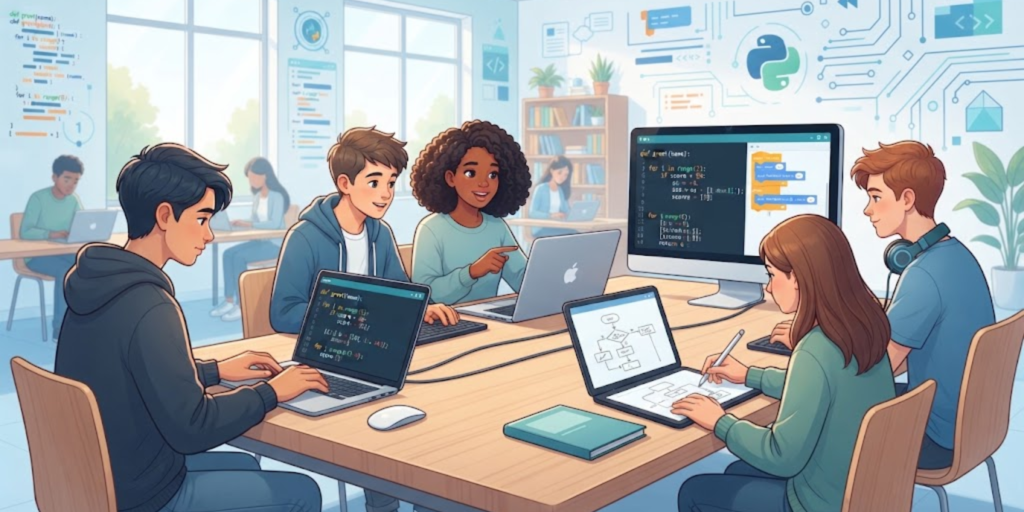
Choosing the best first programming language can feel confusing when teenagers see so many options online. Python, JavaScript, Scratch, Java, and other languages all have different uses. However, a beginner does not need to learn everything at once. The right choice depends on what you want to create and how you prefer to learn. Some teenagers want to build websites, while others are interested in games, apps, or artificial intelligence. This guide explains which programming languages are easiest for beginners, why Python is often a strong starting point, and how to choose a language that matches your goals.
What Makes a Programming Language Good for Beginners?
The best language for a beginner should help them focus on learning programming ideas instead of struggling with complicated rules.
A good first language should usually have:
- Easy-to-read syntax
- Simple beginner resources
- Useful real-world applications
- A large learning community
- Fun projects to practice with
- Skills that can be used later
Most importantly, beginners should be able to create something interesting fairly quickly. Building a small quiz, game, calculator, or website can make learning feel much more rewarding.
Is Python the Best First Programming Language for Teenagers?
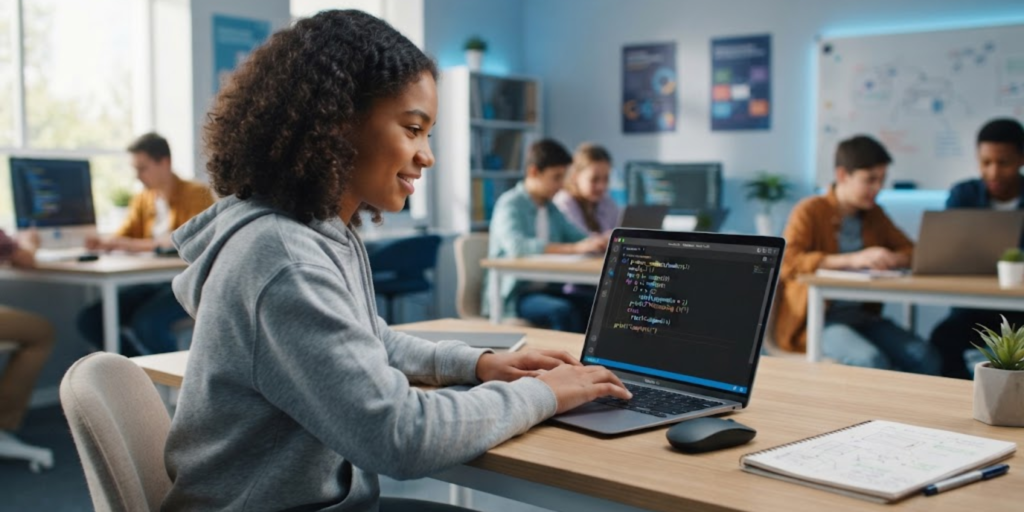
For many teenagers, Python is one of the best first programming language choices. Its syntax is generally clear and easier to read than many traditional programming languages.
For example, Python allows beginners to focus on programming concepts such as variables, conditions, loops, and functions without dealing with too much complicated punctuation.
Python can also be used for many different types of projects, including:
- Simple programs and automation
- Games
- Websites
- Data analysis
- Artificial intelligence
- Machine learning
The official Python documentation and beginner resources provide learning materials for people who are new to the language. Python’s flexibility means teenagers can continue using it as their skills grow.
If Python sounds interesting, our detailed guide on Python for teens and high school students can help you understand how teenagers can start learning and practicing it.
Why Python Is Easy for Beginners
Python uses simple and readable code compared with many other languages. This does not mean Python is effortless, but beginners can often understand what their code is doing more easily.
For instance, a teenager can start with small programs that:
- Ask users questions
- Perform calculations
- Create simple quizzes
- Work with lists and information
- Solve everyday problems
As a result, Python can be a great choice for students who want to learn both basic programming and more advanced technology topics later.
When JavaScript Is a Better First Choice
Python is not automatically the right answer for everyone. Teenagers who are mainly interested in websites may prefer starting with JavaScript.
JavaScript is widely used to make websites interactive. For example, it can help create buttons, menus, quizzes, animations, and other features that respond when users interact with a webpage.
However, beginners interested in web development should understand that JavaScript is usually part of a larger set of skills. You may also need to learn HTML and CSS.
JavaScript May Suit You If You Want To:
- Build websites
- Create interactive web pages
- Learn front-end development
- See your projects directly in a browser
The advantage is that you can quickly see the results of your work. On the other hand, learning HTML, CSS, and JavaScript together may feel like learning several connected skills at once.
What About Scratch for Younger Beginners?
Scratch is another excellent starting point, especially for younger teenagers or complete beginners who find written code intimidating.
Instead of typing programming commands, Scratch uses visual blocks that connect together. Users can create games, animations, stories, and interactive projects. Scratch is designed especially for young people aged 8 to 16, although people of different ages also use it.
Teenagers can explore Scratch and its beginner programming environment to understand how visual coding works.
Scratch teaches important ideas such as:
- Sequences
- Loops
- Conditions
- Variables
- Events
- Problem-solving
Therefore, Scratch can be a useful starting point before moving to Python or JavaScript.
Python vs JavaScript vs Scratch
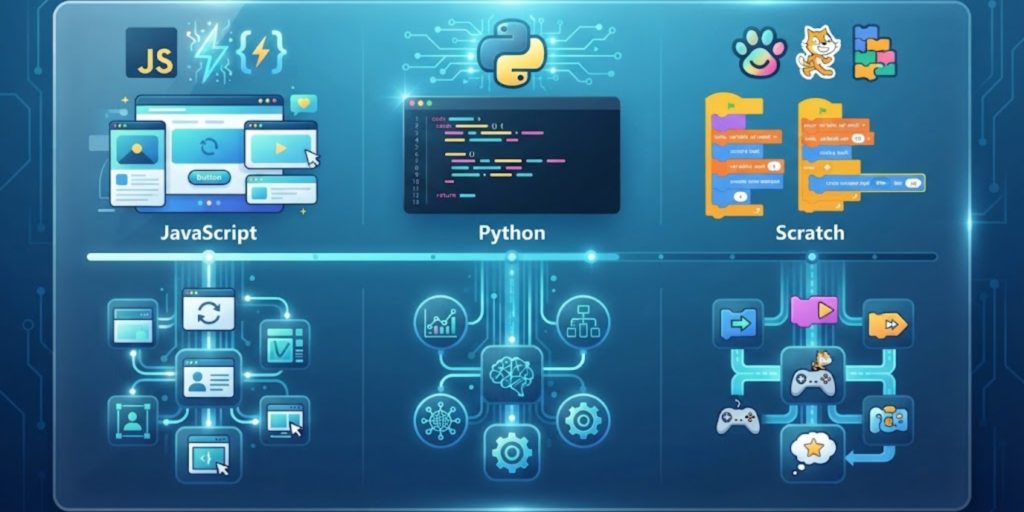
Here is a simple comparison:
Programming Language | Best For | Difficulty for Beginners |
Python | General programming, AI, automation | Easy |
JavaScript | Websites and web development | Easy to moderate |
Scratch | Games, animations, learning basics | Very easy |
There is no single language that is perfect for every teenager. Your interests should play an important role in your decision.
For example, a student interested in AI may enjoy Python. Meanwhile, someone who wants to design websites may feel more motivated by JavaScript.
How To Choose Your First Programming Language
Instead of choosing a language because someone says it is the most popular, think about what you want to create.
1. Choose Based on Your Interests
Ask yourself questions such as:
- Do I want to create websites?
- Do I enjoy games?
- Am I interested in AI?
- Do I want to build useful programs?
- Do I enjoy solving problems?
Your answers can make the decision easier.
For example, Python is a strong option for teenagers interested in AI and general programming. If you are curious about responsible ways students can use artificial intelligence, our guide on smart ways for teens to use AI explores useful possibilities and important limitations.
2. Start With One Language
One common beginner mistake is trying to learn Python, JavaScript, Java, and several other languages at the same time.
Instead, choose one language and spend time understanding the basics. Learn how variables, conditions, loops, and functions work before jumping between different programming languages.
The concepts you learn will often help you later. Once you understand programming logic, learning another language can become easier.
3. Build Small Projects
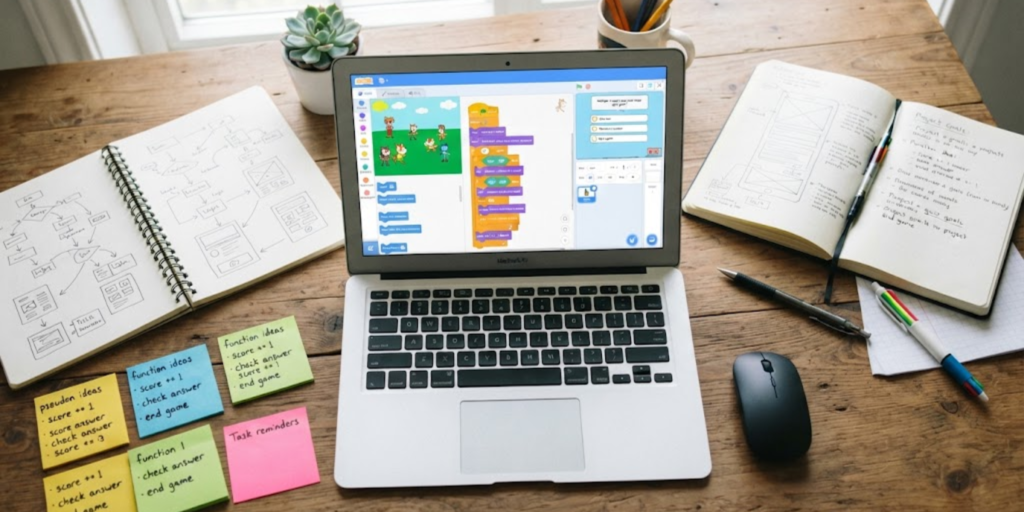
Watching coding videos can help, but writing your own code is essential.
Start with simple projects such as:
- A number guessing game
- A calculator
- A quiz
- A to-do list
- A simple personal webpage
Small projects teach you how programming works when things go right and when errors appear. Debugging mistakes is also an important part of becoming a better programmer.
How Can a Teenager Start Learning Programming?
Starting does not require expensive equipment or advanced knowledge. A computer and a reliable learning routine are often enough.
Here is a simple approach:
- Choose one programming language based on your interests.
- Learn the basic concepts such as variables and loops.
- Write code yourself instead of only watching tutorials.
- Create small projects to practice what you learn.
- Fix your mistakes and understand why they happened.
- Gradually try harder projects as your confidence grows.
If you are completely new to coding, our guide on how to start coding as a teenager gives beginners a practical starting path.
Mistakes To Avoid When Learning Your First Language
Beginners often make progress slower because of a few common mistakes.
Trying To Learn Everything Quickly
Programming takes time. You do not need to memorize every command or understand advanced topics immediately.
Instead, focus on one concept at a time.
Copying Code Without Understanding It
Copying code may make a project work, but it does not always teach you why it works.
Try changing the code and observing what happens. This can help you understand programming much better.
Giving Up After Errors
Errors are normal in programming. Even experienced developers spend time finding and fixing problems.
When an error appears, read the message carefully and check your code step by step. Over time, debugging becomes an important skill.
So, Which Language Should You Choose?
For many teenagers, Python is the strongest overall starting point because it is beginner-friendly and useful in many areas of technology.
However, JavaScript may be better if your main goal is web development. Scratch can also be an excellent choice for beginners who want a visual introduction to programming.
The best choice is the language that matches your goals and keeps you interested enough to continue practicing.
Frequently Asked Questions(FAQ)
1. What is the best first programming language for teenagers?
Python is often a great first choice because its syntax is readable and it can be used for many different types of projects.
2. Is Python easy for teenagers to learn?
Python can be easier for beginners to understand than some languages because its code is generally clear and simple to read.
3. Should I learn Python or JavaScript first?
Choose Python for general programming, AI, and automation. Choose JavaScript if your main goal is building interactive websites.
4. Can a teenager learn coding without experience?
Yes. Beginners can start without previous programming knowledge by learning basic concepts and practicing with small projects.
5. Is Scratch only for little kids?
No. Although Scratch is designed especially for ages 8 to 16, it can be useful for anyone who wants a visual introduction to programming concepts.
6. How long does it take to learn a programming language?
Learning the basics can take weeks or months depending on your practice. Becoming highly skilled takes longer because programming involves continuous learning.
Conclusion
The best first programming language depends on what you want to create and how you prefer to learn. For many teenagers, Python is an excellent starting point because it is readable, flexible, and useful in many areas of technology. However, JavaScript is a strong choice for future web developers, while Scratch offers a simple visual introduction to coding. Start with one language, practice regularly, and build small projects. Most importantly, focus on learning step by step rather than trying to master everything at once.