
Python for Teens and High School Students

Technology is a big part of everyday life, and learning to code can help teens understand how the digital world works. Tech for Teens provides useful information about how technology can support and empower young people. Learning Python as a teen or high school student is a great way to begin coding because its clear and beginner-friendly syntax makes programming easier to understand. Whether your goal is developing games, designing websites, learning about artificial intelligence, analyzing data, or strengthening your programming abilities, Python provides countless opportunities to explore and create. It is widely used by professional developers and major technology companies, making it a valuable skill for the future. In this guide, you will learn the basics of Python programming, discover helpful resources, and find fun projects that can help you build confidence as a young programmer.
What Makes Python a Great Choice for New Programmers
Choosing your first programming language can feel overwhelming, especially when there are so many options available. Python stands out because it is simple, beginner friendly, and widely used around the world. Many students start their coding journey with Python because it helps them focus on learning programming concepts instead of worrying about complicated rules.
One of Python’s greatest strengths is its simple and easy to read coding structure. The code looks similar to plain English, making it easier for teens to understand what each line does. This allows beginners to learn more quickly while gaining confidence through consistent practice of new skills.
Python is also a highly flexible programming language that can be used for a wide range of projects and applications. Students can use it for web development, game creation, automation, data analysis, and even artificial intelligence. Rather than switching between multiple programming languages, beginners can discover various technology fields while continuing to work with Python.
Another reason Python is a great choice is the large learning community behind it. There are countless tutorials, coding lessons, and beginner projects available online. If beginners encounter challenges while coding, they can access a wide range of resources and community support created by programmers who have already overcome those same obstacles.
Learning Python also teaches important problem solving and logical thinking skills. As students create projects and write code, they learn how to break big problems into smaller steps. These skills are valuable not only in computer science but also in school, future careers, and everyday life.
For teens looking for a beginner friendly programming language with room to advance, Python offers an excellent starting point and a solid base for future learning. It is simple enough for beginners yet powerful enough to be used by professional developers, making it an excellent first programming language.
Benefits of Learning Python as a Teen

Learning Python as a teenager is about more than just writing code. It helps students build valuable skills that can support them in school, future careers, and everyday problem solving. Because Python is easy to learn, teens can start creating projects quickly and stay motivated as they improve.
Develop Strong Problem Solving Skills
Programming teaches you how to think through challenges step by step. When writing Python code, you learn how to break large problems into smaller tasks and find logical solutions. These skills can be useful in subjects like math, science, and computer science.
Build Real World Coding Skills
Python is used by developers, businesses, researchers, and technology companies across the world. By learning Python programming early, teens gain practical experience with tools and concepts that are used in real software development. This can provide a strong foundation for future learning.
Explore Different Areas of Technology
One of the best things about Python is its flexibility. Students can experiment with game development, web development, automation, artificial intelligence, and data science without needing to learn a completely different programming language. This makes it easier to discover which areas of technology are the most interesting.
Boost Creativity and Confidence
Coding is a creative skill. Teens can design games, build simple apps, create interactive stories, or develop useful tools. Every completed project helps build confidence and encourages students to keep learning and improving their programming skills.
Prepare for Future Career Opportunities
Many fast growing careers involve coding and technology. Learning Python as a teen can provide an early advantage for students interested in software development, machine learning, cybersecurity, engineering, or data analysis. Even if technology does not become your career, coding knowledge is becoming increasingly valuable in many industries.
Learn at Your Own Pace
Python is suitable for both complete beginners and advanced learners. Teens can start with simple exercises and gradually move on to more complex projects as their knowledge grows. This flexibility makes learning less stressful and more enjoyable.
By starting with Python, teens gain a practical skill that combines creativity, logic, and technology. The earlier students begin learning, the more opportunities they have to explore, experiment, and build confidence in their abilities.
How to Get Started with Python
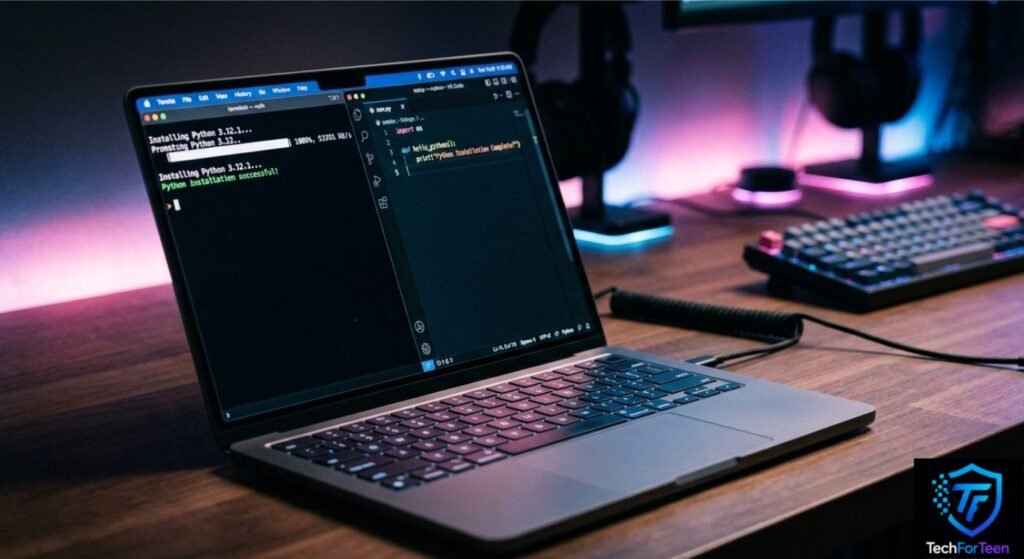
Getting started with Python is easier than many teens expect. You do not need expensive software or advanced computer skills to begin learning. With a few simple steps, you can start writing your first programs and building real projects.
Install Python on Your Computer
The first thing you need to do is install Python by downloading it from its official website. The installation process is simple and works on Windows, Mac, and Linux computers. Once installed, you will have everything needed to begin learning and practicing Python programming.
Choose a Beginner Friendly Code Editor
A code editor is the software or tool that allows you to write, edit, and run your Python programs. Popular options include Visual Studio Code, PyCharm, and Replit. Replit is especially useful for beginners because it works directly in a web browser and does not require any setup.
Learn the Basic Concepts First
Before jumping into large projects, focus on understanding the fundamentals. Start with variables, data types, input and output, loops, and functions. These core concepts form the foundation of almost every Python project you will create in the future.
Practice with Small Projects
A great way to improve your programming abilities is by creating projects and applying what you learn through hands-on experience. Start with simple projects such as a calculator, quiz game, or number guessing game. Small projects help you apply new skills and make learning more enjoyable. If you enjoy creating games, you may also find our guide on how to build a modern house in Minecraft helpful for developing creative thinking and project planning skills.
Use Free Learning Resources
A wide variety of free tutorials, practice exercises, and beginner friendly courses are available online to help students learn Python. Learning from different resources can help you understand concepts more clearly and discover new ways to solve problems. Consistent practice is often more important than spending long hours studying.
Don’t Be Afraid of Mistakes
Every programmer makes mistakes, even experienced professionals. Errors and bugs are a normal part of learning. Rather than feeling discouraged, treat mistakes as learning experiences that help you better understand your code and strengthen your problem solving abilities.
Starting Python does not require special talent or prior experience. By staying curious, practicing regularly, and being patient with the learning process, teens can develop coding skills and create engaging projects that strengthen both their confidence and technical knowledge.
Essential Python Concepts Every Beginner Should Learn
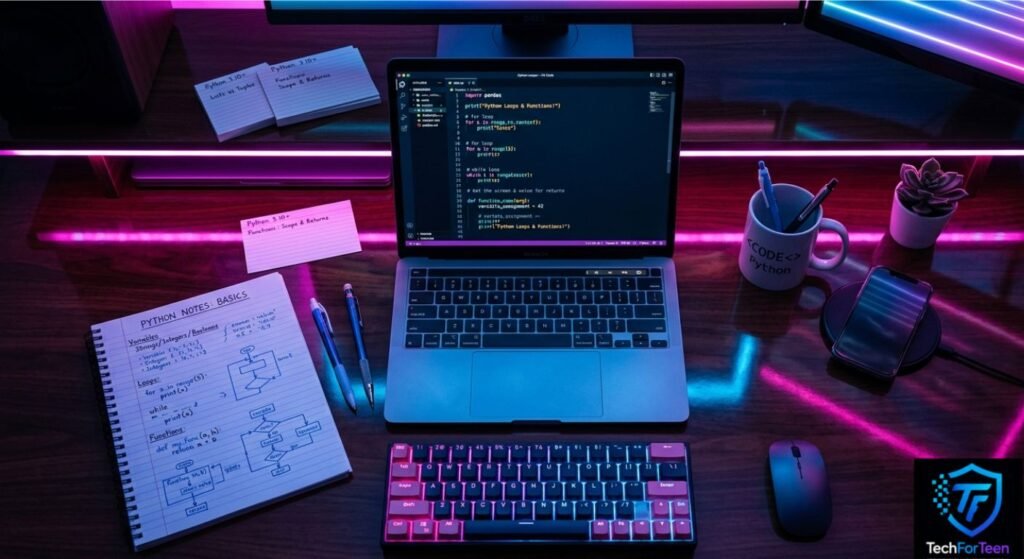
Before creating games, applications, or larger coding projects, it is essential to learn the core fundamentals of Python. These fundamentals help you write better code and make it easier to learn more advanced topics later. Once you understand these building blocks, creating your own programs becomes much more enjoyable.
Variables and Data Types
Variables are used to hold and store data inside a program. For example, you can store a name, score, age, or message in a variable. Python works with several types of data, including numbers, text, and boolean values that represent true or false conditions. Knowing different data types makes it easier to handle and organize information accurately within your programs.
Input and Output
Python programs often interact with users. The input function allows users to enter information, while the print function displays results on the screen. These basic commands make your programs more interactive and practical to use.
Operators and Expressions
Operators perform actions on data. You can use them to add, subtract, multiply, compare values, and much more. Learning how operators work is essential because they appear in almost every Python program.
Conditional Statements
Conditional statements help your program make decisions. Using if, elif, and else statements, your code can respond differently based on specific conditions. This is what allows games, quizzes, and applications to react to user choices.
Loops
Loops help automate repetitive tasks by running the same set of instructions multiple times without duplicating code. The most widely used loop structures in Python are for loops and while loops. Learning loops can save time and make your programs more efficient.
Functions
Functions allow you to group code into reusable sections. Instead of writing the same instructions repeatedly, you can create a function and use it whenever needed. This helps keep your code organized, simpler to maintain, and easier to understand.
Lists and Dictionaries
Lists and dictionaries are important data structures in Python. A list stores multiple items in a single collection, while a dictionary stores information using keys and values. These tools make it easier to structure, organize, and handle large sets of data efficiently.
Debugging and Problem Solving
Every programmer encounters errors while coding. Learning how to read error messages and fix problems is an important skill. Debugging allows you to understand how your code works while strengthening your problem solving skills and ability to fix issues on your own.
By mastering these essential Python concepts, beginners build a strong foundation for future learning. Whether your goal is game development, web development, data science, or artificial intelligence, these core programming skills will support every project you create.
Fun Python Projects for Teens
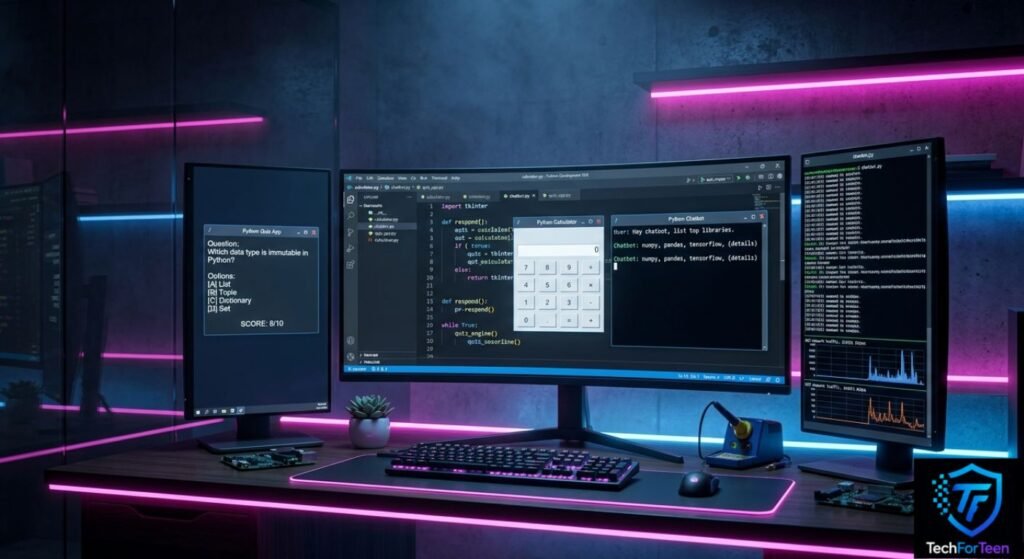
A highly effective way to learn Python is by creating projects that let you apply your skills in practical situations. Projects help you apply what you have learned, improve your problem solving skills, and gain confidence as a programmer. Even simple projects can teach valuable lessons while making coding more enjoyable.
Create a Simple Calculator
A calculator is a great beginner project because it teaches how to work with variables, user input, and mathematical operators. You can start with basic calculations and later add more advanced features as your skills improve.
Build a Quiz Game
Quiz games are fun to create and play. This project helps you practice conditional statements, loops, and user interaction. You can create quizzes about your favorite topics, school subjects, or even video games to make learning more engaging.
Design a Number Guessing Game
A number guessing game challenges players to guess a secret number chosen by the computer. This project helps beginners develop problem solving skills while learning how to use loops, conditional statements, and random values in Python.
Make a Simple Chatbot
Creating a chatbot introduces you to user interaction and decision making in Python. Your chatbot can answer basic questions, tell jokes, or provide simple responses. As you gain experience, you can add more features and improve its conversations.
Build a Personal Study Tool
Python can be used to create useful tools for school. You might build a homework tracker, a study timer, or a grade calculator. These projects allow you to solve practical problems while reinforcing key programming concepts through hands-on practice.
Create Text Based Adventure Games
Text based adventure games let players make decisions that influence how the story unfolds. These projects encourage creativity and help you learn how to manage multiple paths and outcomes within a program. If you enjoy creating game worlds, you might also like reading about Best Farms in Minecraft to see how planning and strategy can inspire project ideas.
Track Daily Habits
A habit tracker is a practical project that helps you organize daily goals. You can record activities, track progress, and display results. This project teaches data organization while creating something useful for everyday life.
Experiment and Build Your Own Ideas
As your coding skills grow, try creating projects based on your interests. Whether you enjoy gaming, sports, music, or technology, Python gives you the freedom to turn your ideas into real programs. The more projects you build, the stronger your programming skills will become.
Working on projects is one of the fastest ways to improve as a beginner coder. Each project teaches new concepts, strengthens your understanding of Python programming, and makes learning more rewarding.
Python Games You Can Build as a Beginner
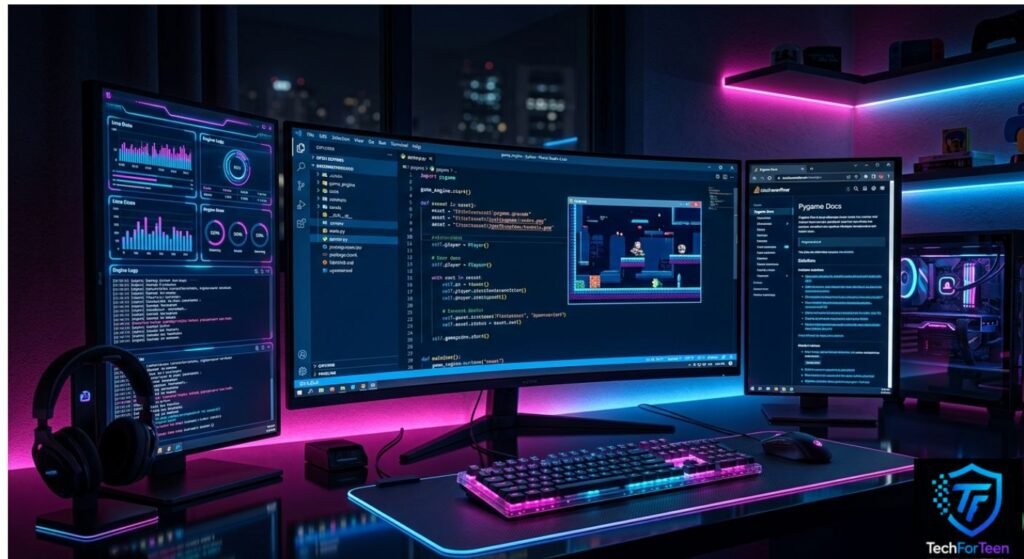
Building games is one of the most exciting ways to learn Python. Games help beginners practice programming concepts while creating something fun and interactive. While building games, you practice using variables, loops, functions, and conditional statements in real coding scenarios.
Number Guessing Game
A number guessing game is often one of the first projects new programmers create. In this game, the computer generates a random number, and the player attempts to identify the correct answer through a series of guesses. This simple project teaches user input, loops, and decision making while keeping the game fun and engaging.
Rock Paper Scissors
Rock Paper Scissors is another beginner friendly project. Players choose an option, and the computer makes its own choice. The program then determines the winner. This game is perfect for practicing conditional logic and learning how programs respond to different outcomes.
Hangman Game
The Hangman game helps beginners work with strings, lists, and loops. In this game, players try to uncover a secret word by guessing its letters one at a time. As you improve your coding skills, you can add features such as score tracking, difficulty levels, or custom word lists.
Quiz and Trivia Games
Quiz games are simple to build and highly customizable. You can create questions about science, sports, movies, or your favorite hobbies. This type of project helps you practice data organization and user interaction while creating an enjoyable learning experience.
Text Based Adventure Games
Adventure games allow players to make choices that affect the story. These projects encourage creativity and teach how to manage multiple outcomes within a program. If you enjoy creating game worlds, you may also find inspiration in our guide on how to find diamonds fast in Minecraft, where strategy and exploration play an important role.
Tic Tac Toe
Tic Tac Toe is a great project for beginners who want a challenge beyond basic games. It introduces game logic, board management, and decision making. Building this project can strengthen your understanding of programming fundamentals while improving problem solving skills.
Simple Pygame Projects
Once you understand the basics of Python, you can explore Pygame, a popular library used for creating graphical games. With Pygame, beginners can build simple arcade style games that include animations, movement, and sound effects. This is a great step toward learning game development.
Creating games helps turn programming concepts into practical skills. Each project teaches something new while keeping the learning process enjoyable. As you complete more games, you will become more confident in your Python coding abilities and ready to tackle larger projects.
Practice Python with Exercises and Tutorials
Learning Python is not just about reading lessons or watching videos. The real progress happens when you practice regularly. Exercises and tutorials help beginners apply new concepts, strengthen their understanding, and develop the confidence needed to build their own projects.
Start with Small Coding Challenges
Simple coding challenges are a great way to improve your skills. Tasks such as printing patterns, calculating averages, or checking whether a number is even or odd can help you understand how Python works. These exercises may seem small, but they build a strong foundation for more advanced programming.
Follow Step by Step Tutorials
Tutorials guide you through real projects while explaining each concept along the way. They help beginners understand how different parts of a program work together. Following tutorials can also introduce you to new coding techniques and problem solving methods.
Practice with Python Games
Coding games are both educational and entertaining. Building projects such as a number guessing game, quiz game, or Hangman game allows you to practice loops, functions, and conditional statements in a fun way. The more you build, the more comfortable you become with Python programming.
Solve Real World Problems
One of the best ways to learn is by creating programs that solve everyday problems. You could build a homework planner, study timer, or expense tracker. These practical projects help you see how coding skills can be used outside of the classroom.
Explore Online Coding Platforms
Many online platforms provide free Python exercises, interactive lessons, and coding challenges. These resources offer instant feedback, making it easier to identify mistakes and improve your skills. Regular practice on these platforms can help beginners progress more quickly.
Learn from Existing Projects
Looking at other people’s code can teach you new ideas and programming techniques. Study simple projects, understand how they work, and then try adding your own features. If you enjoy creating and improving projects, you might also like our guide on Free Fire vs PUBG, which compares different gaming experiences and can inspire project ideas based on your interests.
Make Practice a Daily Habit
You do not need to spend hours coding every day. Even 15 to 30 minutes of consistent practice can make a big difference over time. Regular coding sessions help reinforce programming concepts and make learning feel more natural.
The key to learning Python is consistent practice. Every exercise you complete and every tutorial you follow helps strengthen your coding knowledge. Over time, these small efforts add up and make it easier to build larger, more exciting projects.
Exploring Data Science and AI with Python

Python is not only used for building games and websites. It is also one of the most popular programming languages for data science and artificial intelligence. Many students become interested in these fields because they combine technology, creativity, and problem solving in exciting ways.
What Is Data Science?
Data science is the process of collecting, organizing, and analyzing information to find useful patterns and insights. Companies, researchers, and organizations use data science to make better decisions. With Python, beginners can learn how to work with data and create simple reports, charts, and visualizations.
How Python Helps with Data Analysis
Python includes powerful libraries that make data analysis easier. Tools such as Pandas and NumPy help programmers organize information, perform calculations, and work with large datasets. These libraries are widely used in both education and professional software development.
Understanding Artificial Intelligence
Artificial intelligence, often called AI, allows computers to perform tasks that normally require human thinking. Examples include recognizing images, answering questions, recommending videos, and understanding speech. Python has become a leading language for AI because it offers beginner friendly tools and strong community support.
Beginner AI Projects to Try
Teens can start with simple AI projects without needing advanced knowledge. Creating a basic chatbot, text classifier, or recommendation system can introduce important machine learning concepts while keeping the learning process fun and manageable.
Why Python Is Widely Used in AI and Machine Learning
Many AI developers choose Python because it is easy to learn and works well with popular machine learning libraries. These tools help programmers build intelligent applications without needing to write everything from scratch. As a result, Python has become a common choice for students interested in future technology careers.
Skills You Can Develop
Learning data science and AI helps students improve critical thinking, problem solving, and analytical skills. These abilities are valuable in many fields, including business, healthcare, engineering, and computer science. Even beginners can start exploring these areas by understanding basic computer concepts through resources such as Computer Basics for Kids and then moving on to simple projects and guided tutorials.
The Future of Python in Technology
As technology continues to evolve, the demand for skills related to data science, machine learning, and artificial intelligence keeps growing. Python provides an accessible path for teens who want to explore these exciting areas and prepare for future opportunities in the digital world.
Data science and AI may sound advanced, but every expert starts with the basics. By learning Python and practicing regularly, teens can gradually build the skills needed to understand modern technology and create innovative projects of their own.
Real-World Uses of Python
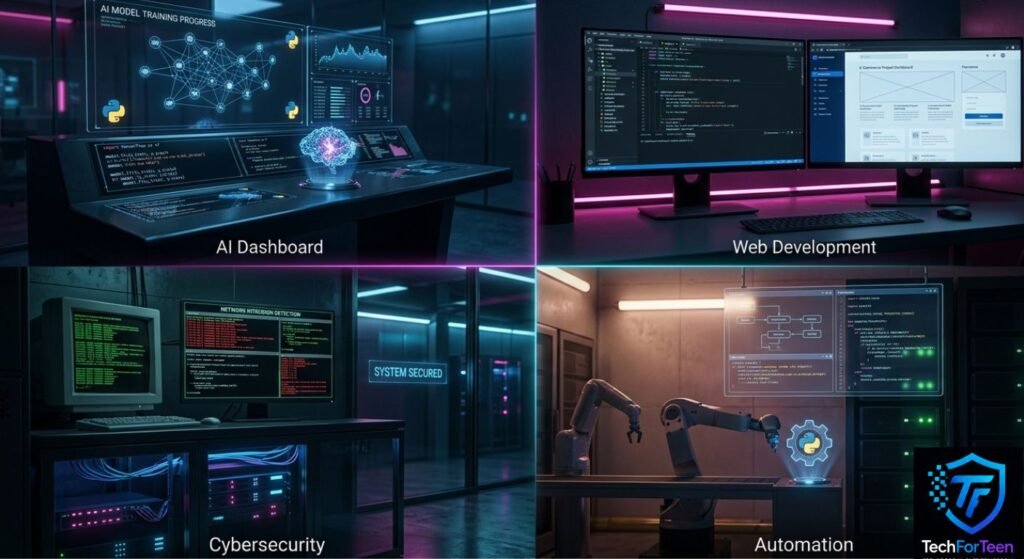
Python is more than just a language for learning how to code. It is used by businesses, researchers, developers, and organizations around the world to solve real problems. One reason Python remains so popular is its ability to work across many different industries and projects.
Web Development
Python is used to create many websites and web applications. Developers use Python frameworks to create fast, secure, and reliable online platforms. From small personal websites to large web services, Python helps power many of the tools people use every day.
Data Analysis and Visualization
Organizations gather large volumes of data on a daily basis. Python helps analyze this data and turn it into useful insights. By creating charts, graphs, and reports, programmers can better understand trends and make informed decisions based on real information.
Artificial Intelligence and Machine Learning
Python is a key programming language widely used in artificial intelligence and machine learning fields. Developers use it to build systems that can recognize images, recommend content, understand language, and automate complex tasks. Many modern AI applications rely on Python because of its flexibility and powerful libraries.
Automation and Productivity
Python is commonly used to automate tasks that need to be repeated regularly. Rather than wasting time on repetitive manual work, programmers can write scripts that handle tasks automatically. This can save time, improve accuracy, and increase productivity in both school and professional environments.
Game Development
Many beginners discover Python through game development. Simple games can be created using basic Python skills, while more advanced projects can use libraries such as Pygame. Building games is a practical way to improve programming knowledge while creating something fun and interactive.
Scientific Research
Scientists and researchers use Python to analyze data, run simulations, and solve complex problems. Its ability to handle large amounts of information makes it valuable in fields such as physics, biology, astronomy, and environmental science.
Cybersecurity and Software Development
Python is also used in cybersecurity and software development. Professionals build tools to check systems, observe networks, and strengthen security. Its versatility allows developers to build applications, automate tasks, and solve technical challenges efficiently.
Why Learning Python Matters
Because Python is used in so many areas, learning it can open the door to countless opportunities. Whether your interest is web development, artificial intelligence, data science, automation, or software development, Python provides a strong foundation that can support future learning and career growth.
For students and beginner coders, Python offers the chance to learn skills that are both practical and relevant in today’s technology driven world. This is one of the main reasons it remains one of the most useful programming languages to learn.
Best Free Python Courses and Learning Resources
Learning Python does not have to be expensive. There are plenty of quality online resources that allow teens to learn programming comfortably at their own speed. Whether you prefer video lessons, interactive exercises, or project based learning, there are plenty of options to help you build strong coding skills.
Free Python Courses for Beginners
Many beginner friendly courses teach Python step by step. These courses often start with the basics, including variables, loops, functions, and data structures, before moving on to more advanced topics. A structured course can make learning easier because it provides a clear path from beginner to intermediate level.
Interactive Coding Platforms
Interactive learning platforms allow students to write and run code directly in their browser. These websites provide instant feedback, making it easier to spot mistakes and understand how Python works. Practicing in an interactive environment can help beginners learn faster and stay motivated.
Official Python Documentation
The official Python documentation is considered one of the most trustworthy resources for learning the language. It contains detailed explanations, examples, and references for Python features. While beginners may not use it every day, it becomes a valuable resource as coding skills grow. You can explore the official Python guides through the Python website.
YouTube Tutorials and Video Lessons
Video tutorials can be helpful for students who learn best by watching demonstrations. Many experienced developers share free Python lessons that explain concepts in a simple and easy to follow way. Watching different instructors can also help you discover new coding techniques and approaches.
Coding Challenges and Practice Websites
Practice is essential when learning programming. Coding challenge websites offer exercises that test your understanding and encourage problem solving. Completing regular challenges can improve your confidence and help you apply what you have learned in real situations.
Project Based Learning Resources
Creating projects is one of the most effective ways to learn Python programming. Many websites provide guided project tutorials that teach coding through practical examples. Creating calculators, chatbots, games, and automation tools helps reinforce important programming concepts while keeping learning enjoyable.
Learning Communities and Forums
Joining a coding community can make the learning process easier. Online forums and programming groups allow students to ask questions, share projects, and learn from experienced developers. Being part of a supportive community can help you stay motivated and continue improving your skills.
The best learning resource is the one that encourages you to keep practicing. By combining courses, tutorials, coding exercises, and real projects, teens can develop a strong understanding of Python and continue growing as programmers.
Helpful Python Books for Teens
Online courses and tutorials are great for learning Python, but books can also be valuable resources. A good Python book allows students to learn at their own pace, review concepts whenever needed, and practice through guided exercises. Many beginner friendly books are written specifically for teens and young programmers.
Python for Teenagers
This popular book is designed for students who are new to coding. It introduces Python programming through practical examples and engaging projects. Readers learn core concepts while exploring topics such as problem solving, debugging, and basic software development.
Python Programming for School Students
Students who enjoy math, logic, and analytical thinking may find this book especially useful. It focuses on programming fundamentals, algorithms, and structured problem solving. The lessons help readers understand how to think like a programmer while building a strong foundation in Python.
Creative Coding in Python
For teens who enjoy creativity, this book offers a collection of hands on projects involving art, games, animations, and interactive programs. Instead of focusing only on theory, it encourages readers to experiment with code and build unique creations of their own.
Books That Focus on Projects
Project based books can be excellent for beginners because they teach programming through real examples. Building calculators, quiz games, simple chatbots, and other applications helps students apply what they learn while creating something useful and enjoyable.
Why Learning from Books Still Matters
Books often provide deeper explanations than short tutorials or videos. They encourage readers to slow down, understand concepts thoroughly, and practice independently. This approach can help develop stronger programming skills and better problem solving abilities over time.
Choosing the Right Book
The best Python book depends on your learning style and interests. Some students prefer books filled with projects, while others enjoy detailed explanations of programming concepts. Choosing a book that matches your goals can make learning more enjoyable and help you stay motivated.
Combining Books with Other Resources
Books are most effective when they are paired with consistent hands-on practice. Reading about Python is helpful, but writing code is what builds real experience. Students can use books alongside online courses, tutorials, and coding exercises to create a well rounded learning experience.
A good Python book can serve as a trusted guide throughout your coding journey. With consistent practice and the right resources, teens can strengthen their programming knowledge and gain the confidence to tackle larger and more exciting projects.
Common Mistakes New Python Learners Make
Every programmer makes mistakes when learning to code. In fact, mistakes are a normal part of the learning process. The key is to recognize common problems early and learn how to avoid them. By understanding these challenges, teens can build stronger Python skills and make steady progress.
Trying to Learn Too Much Too Quickly
Many beginners try to learn every Python topic at once. While enthusiasm is great, rushing through lessons often leads to confusion. It is better to focus on one concept at a time and practice it before moving on to something more advanced.
Copying Code Without Understanding It
Copying code from tutorials may help a project work, but it does not always help you learn. Take time to understand what each line does and why it is needed. This practice helps strengthen your problem solving abilities and makes it easier to create your own programs in the future.
Skipping the Fundamentals
Some students want to jump directly into game development, artificial intelligence, or large projects. However, concepts such as variables, loops, functions, and data structures are the foundation of Python programming. Learning these basics first will make advanced topics much easier to understand.
Ignoring Error Messages
Error messages can seem frustrating at first, but they are actually helpful. Python often tells you where the problem is and what might have gone wrong. Learning to read and understand error messages is one of the most valuable skills a beginner can develop.
Not Practicing Regularly
Reading lessons alone is not enough to become a confident programmer. Coding requires consistent practice. Even a short daily coding session can help strengthen your understanding, reinforce key concepts, and improve your skills over time.
Giving Up After a Bug
Every programmer encounters bugs and unexpected problems. New learners sometimes feel discouraged when their code does not work immediately. Instead of giving up, treat each bug as a learning opportunity. Solving problems helps you become a stronger and more independent coder.
Building Only Tutorial Projects
Tutorials are helpful for getting started, but over time it’s important to build your own projects to truly apply what you have learned. Personal projects encourage creativity and help you apply what you have learned in new ways. They also strengthen your confidence and programming abilities.
Comparing Yourself to Experienced Programmers
It is easy to feel behind when looking at advanced developers and their projects. Keep in mind that every expert once began as a complete beginner. Pay attention to your personal growth and take time to appreciate even small improvements you make along the way.
Making mistakes is part of learning Python. The most successful students are not the ones who avoid mistakes completely, but the ones who learn from them and keep practicing. With patience, consistency, and a willingness to improve, anyone can become a skilled programmer.
Tips to Learn Python Faster
Learning Python does not have to be difficult or overwhelming. While everyone learns at a different pace, certain habits can help you understand concepts more quickly and retain what you learn. The goal is not to rush through lessons but to build strong programming skills through consistent practice.
Practice a Little Every Day
Short and regular practice sessions are often more effective than studying for several hours once a week. Spending 20 to 30 minutes coding each day helps reinforce concepts and keeps your skills fresh. Being consistent is one of the most important keys to achieving long term success.
Focus on the Fundamentals
Before moving into advanced topics such as machine learning or web development, make sure you understand the basics. Variables, loops, functions, conditional statements, and data structures form the foundation of Python programming. A strong foundation makes future learning much easier.
Learn by Building Projects
Projects help turn theory into real experience. Instead of only reading tutorials, apply what you learn by creating simple calculators, quiz games, chatbots, or personal tools. Building projects improves problem solving skills and helps you remember concepts more effectively.
Break Large Problems into Smaller Steps
Many beginners feel stuck when working on complex tasks. A useful strategy is to divide large problems into smaller and more manageable pieces. Solving one step at a time makes coding less intimidating and helps you stay focused.
Read and Understand Your Code
Do not just write code and move on. Take time to review your programs and understand how each section works. This habit strengthens your programming knowledge and makes it easier to spot mistakes in future projects.
Use Multiple Learning Resources
Different resources explain concepts in different ways. If one tutorial feels confusing, try another course, book, or video. Combining learning resources can help you gain a clearer understanding of Python concepts and discover new approaches to coding.
Learn from Your Mistakes
Errors are a normal part of programming. Instead of feeling frustrated, use mistakes as learning opportunities. Reading error messages, testing solutions, and fixing bugs can teach valuable lessons that improve your coding abilities.
Stay Curious and Keep Experimenting
One of the best ways to grow as a programmer is to explore your own ideas. Try changing code, adding new features to projects, or creating something completely original. Curiosity encourages deeper learning and helps make coding more enjoyable.
Learning Python faster is not about finding shortcuts. It is about practicing consistently, understanding the fundamentals, and applying your knowledge through real projects. With patience and dedication, teens can build strong coding skills and continue progressing with confidence.
Career Opportunities After Learning Python

Learning Python can open the door to many exciting career paths. While teens do not need to decide on a future profession right away, understanding how Python is used in the real world can provide extra motivation to keep learning. Because Python is one of the most widely used programming languages, it is valuable in many industries.
Software Developer
Software developers create applications, tools, and programs that people use every day. Python is commonly used for building software because it is flexible, easy to maintain, and supported by a large community of developers. Learning Python provides a strong foundation for a future in software development.
Web Developer
Web developers create, manage, and improve websites as well as web applications. Python frameworks make it possible to create secure and efficient online platforms. Students who enjoy designing websites and solving technical problems may find web development an interesting career option.
Data Scientist
Data scientists collect, analyze, and interpret information to help organizations make better decisions. Python is one of the most important tools in data science because it can process large amounts of data and create useful visualizations. This field combines technology, mathematics, and critical thinking.
Artificial Intelligence Engineer
Artificial intelligence continues to grow in importance across many industries. AI engineers use Python to build systems that can learn from data, recognize patterns, and automate tasks. This career is ideal for students interested in innovation and future technologies.
Machine Learning Specialist
Machine learning specialists develop systems that improve automatically through experience and data analysis. Python is widely used in machine learning because of its powerful libraries and tools. This field is becoming increasingly important in areas such as healthcare, finance, and technology.
Cybersecurity Professional
Cybersecurity experts help protect computers, networks, and data from digital threats. Python is often used to automate security tasks, analyze system activity, and develop security tools. Students who enjoy solving puzzles and investigating problems may find cybersecurity appealing.
Game Developer
Game developers create interactive experiences for computers, consoles, and mobile devices. Python can be used to build simple games and learn important game development concepts. It is a great starting point for students who enjoy both gaming and programming.
Automation Specialist
Many businesses use Python to automate repetitive tasks and improve efficiency. Automation specialists create scripts and tools that save time and reduce manual work. This skill is valuable across many industries and can increase productivity significantly.
A Strong Foundation for the Future
Even if you choose a career outside of technology, learning Python develops problem solving, logical thinking, and analytical skills that are useful in many professions. The ability to understand and work with technology is becoming increasingly valuable in today’s digital world.
Python is more than just a programming language. It is a skill that can support future education, personal projects, and career opportunities. By starting early and practicing consistently, teens can build knowledge that may benefit them for years to come.
Frequently Asked Questions About Python for Teens
Is Python a good programming language for beginners?
Yes, Python is widely considered one of the best programming languages for beginners. Its simple syntax and easy to read structure make it easier to understand than many other programming languages. This allows teens to focus on learning programming concepts rather than complicated rules.
How Much Time Does It Take to Learn Python?
The time required depends on how often you practice. Most beginners can learn the basic concepts within a few weeks of regular study. Building strong programming skills and creating larger projects may take several months of consistent practice.
Can a teenager learn Python without any coding experience?
Absolutely. Many students start learning Python with no previous programming knowledge. There are beginner friendly courses, tutorials, books, and exercises designed specifically to help new learners understand coding step by step.
What can teens build with Python?
Teens can create a wide variety of projects using Python. Popular examples include quiz games, calculators, chatbots, automation tools, data analysis projects, websites, and beginner friendly artificial intelligence applications.
Do I need a powerful computer to learn Python?
No. Python works well on most modern computers, including many older laptops and desktops. Beginners can also use online coding platforms that run directly in a web browser without installing additional software.
Is Python used by real companies?
Yes. Many major technology companies use Python for software development, data science, automation, artificial intelligence, and web applications. Its flexibility and reliability make it one of the most popular programming languages in the world.
Should I learn Python before other programming languages?
For many beginners, Python is an excellent first language because it is easy to learn and widely used. Once you understand Python fundamentals, learning other programming languages often becomes much easier.
Can Python help with future careers?
Yes. Python skills are valuable in fields such as software development, web development, data science, artificial intelligence, cybersecurity, automation, and engineering. Learning Python early can provide a strong foundation for future educational and career opportunities.
What is the best way to learn Python?
The most effective approach is to combine learning with practice. Study the basics, complete coding exercises, follow tutorials, and build your own projects. Consistent practice and hands on experience will help you improve faster and gain confidence as a programmer.
Is Python worth learning in 2026 and beyond?
Yes. Python continues to be one of the most popular and widely used programming languages. Its role in emerging fields such as artificial intelligence, machine learning, automation, and data science makes it a valuable skill for students and professionals alike.
Final Thoughts
Python is one of the best programming languages for teens and high school students who want to start coding. Its simple syntax, wide range of applications, and beginner friendly learning curve make it an excellent choice for anyone interested in technology. Whether your goal is to build games, create websites, explore artificial intelligence, or learn data science, Python provides a strong foundation for future growth.
The most important step is to start. You do not need advanced skills or expensive tools to begin learning. With consistent practice, small projects, and the right learning resources, you can steadily improve your coding abilities and gain confidence along the way.
Remember that every skilled programmer was once a beginner. Stay curious, keep experimenting, and do not be afraid to make mistakes. Each project you complete and every challenge you solve will bring you one step closer to becoming a confident Python programmer.