
10 Skills for Teenagers That Are Worth Learning
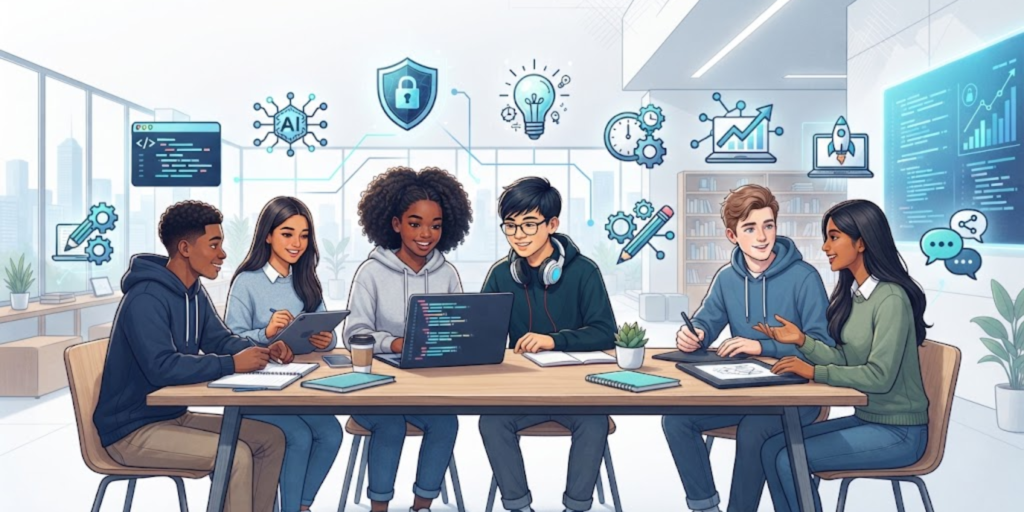
Being a teenager is a great time to build skills that can make school, technology, and future work easier. The right skills for teenagers do not have to be complicated or expensive to learn. Many can be developed through free resources, small projects, and regular practice. From coding and artificial intelligence to communication and online safety, these skills can help you become more confident and independent. The goal is not to learn everything at once. Instead, choose a few skills that match your interests and practice them consistently. In this guide, we will explore 10 useful skills for teenagers and simple ways to start building them today.
Why Should Teenagers Learn New Skills?
School teaches important subjects, but real life also requires skills that may not always appear in a textbook.
However, you may know how to solve a math problem but still need to explain an idea clearly, manage your time, protect an online account, or work with a computer confidently.
Learning practical skills early can also help you discover what you enjoy. You might start with simple coding and discover an interest in software development. Or you may experiment with video editing and realize that you enjoy creating digital content.
You do not need to become an expert immediately. Instead, focus on learning one useful skill, practicing it, and gradually building on what you already know.
If you want a broader overview of useful abilities for students, you can also explore our guide to essential skills students can develop for success.
1. Coding and Programming
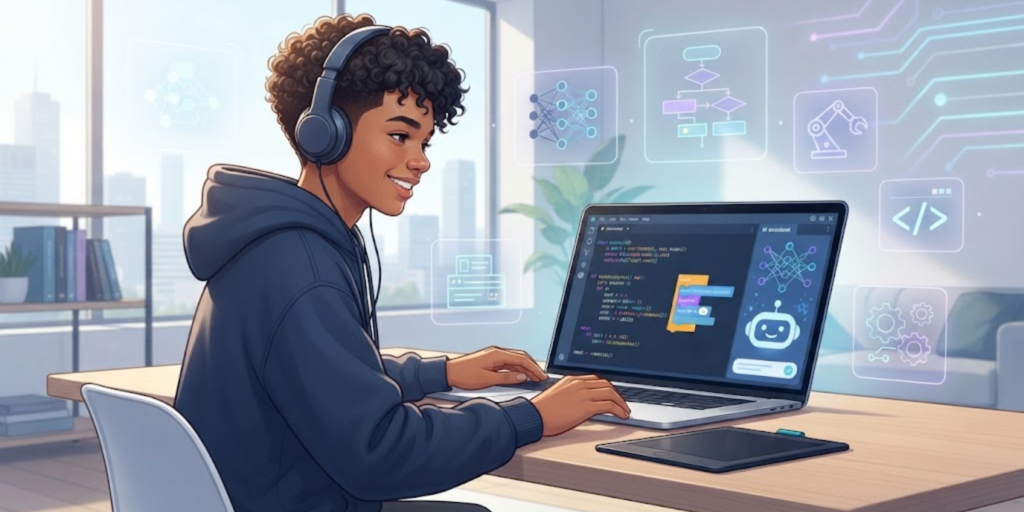
Coding is one of the most useful technical skills for teenagers who are interested in computers and technology.
Programming teaches you how to break a large problem into smaller steps. You also learn how instructions, logic, conditions, and repetition can be used to make a computer perform tasks.
Fortunately, You do not need to start with complicated programming languages. Beginners can start with visual coding tools or a beginner-friendly language such as Python.
What Can Teenagers Build With Coding?
Once you understand the basics, you can then create projects such as:
- Simple games
- Calculators
- Quizzes
- Websites
- Small automation tools
- Interactive stories
- Basic data projects
Python is particularly useful for beginners because it can be used for many different areas of technology. The official Python documentation also provides tutorials and beginner resources for people who want to learn the language.
If you want to go deeper, our guide on Python for teens and high school students explains how beginners can start learning Python and build simple projects.
The most important part is practice. Writing a small program yourself can teach you much more than simply watching someone else write code.
2. Artificial Intelligence Literacy
Artificial intelligence is becoming part of many everyday tools, including search engines, educational platforms, creative software, and productivity apps.
Because of this, AI literacy an important skill for teenagers.
You do not necessarily need to learn advanced machine learning mathematics. Instead, start by understanding what AI can do, where it can make mistakes, and how to use AI tools responsibly.
What Should Teenagers Learn About AI?
Start with these basics:
- What artificial intelligence means
- How AI systems use data
- What generative AI does
- How to write clear prompts
- Why AI can produce incorrect information
- How to check AI-generated answers
- How privacy can be affected when using AI tools
For example, if you use an AI tool to understand a difficult school topic, do not simply copy its answer. Read the explanation, compare important facts with reliable sources, and make sure you understand the subject yourself.
If AI interests you, a structured roadmap to learn AI can help you understand what to study first and what to explore later.
3. Digital Safety and Privacy
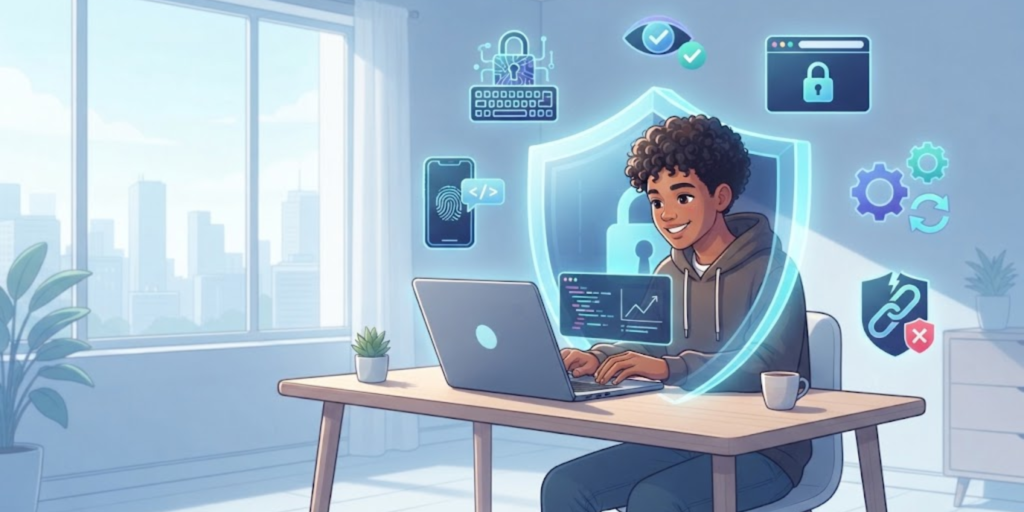
Being comfortable online is not the same as being safe online.
Teenagers use social media, games, messaging apps, websites, and online learning platforms every day. Therefore, knowing how to protect personal information is an essential digital skill.
Important Online Safety Habits
Learn how to:
- Create strong, unique passwords
- Use multi-factor authentication when available
- Recognize suspicious messages and links
- Keep personal information private
- Review account privacy settings
- Install software updates
- Think before downloading unknown files
- Report uncomfortable or suspicious online activity
CISA recommends practical habits such as using strong passwords, enabling multi-factor authentication, thinking before clicking unfamiliar links, and keeping software updated.
You can read more about these habits in CISA’s online safety resources.
Instead, digital safety is about understanding how to use technology wisely. Instead, it is about understanding how to use technology wisely.
4. Communication Skills
Good communication is useful in almost every part of life.
You may need to explain an idea during a class presentation, write an email to a teacher, work on a group project, or communicate with people online.
However, Communication is more than speaking confidently. It also includes listening carefully, writing clearly, asking useful questions, and explaining ideas in a way other people can understand.
How Can Teenagers Improve Communication?
Try these simple habits:
- Explain difficult ideas using simple words.
- Listen fully before responding.
- Ask questions when something is unclear.
- Practice speaking during presentations.
- Read regularly to improve vocabulary.
- Review messages before sending them.
For example, instead of sending a long message that contains several unrelated questions, organize your thoughts into short and clear points.
Good communication becomes easier with practice. You do not need to sound perfect. You simply need to make your ideas understandable.
5. Problem-Solving
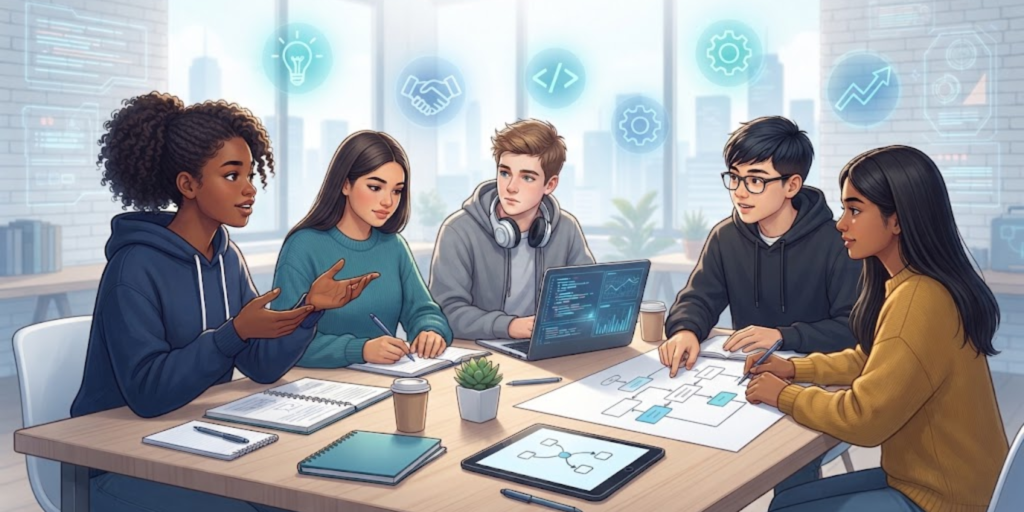
Problem-solving is one of the most valuable skills for teenagers because it applies to almost everything.
A problem could be a difficult homework question, a broken piece of code, a confusing computer error, or a group project that is not going according to plan.
The key is to avoid treating every problem as one huge challenge.
A Simple Problem-Solving Process
Try this approach:
First, identify the problem.
What exactly is going wrong?
Next, break it into smaller parts.
Large problems often become easier when you separate them into smaller tasks.
Then, consider possible solutions.
Think of several options rather than immediately choosing the first idea.
After that, test one solution.
If it does not work, learn from the result and try another approach.
For instance, if a Python program does not work, do not immediately delete everything. Read the error message, identify the section causing the problem, and test a small change.
This way of thinking can help with schoolwork, technology, personal projects, and many future careers.
6. Time Management
Having many assignments, hobbies, exams, projects, and personal responsibilities can make time feel difficult to control.
Time management helps you decide what deserves your attention first.
You do not need an expensive productivity system. A simple to-do list can be enough.
A Simple Time Management Method
At the beginning of the day or week:
- Write down important tasks.
- Separate urgent tasks from less important ones.
- Break large assignments into smaller steps.
- Give yourself realistic deadlines.
- Leave some time for breaks.
- Review what you completed.
For example, instead of writing:
“Study computer science.”
write:
“Review Chapter 3 for 30 minutes and solve five practice questions.”
The second task is easier to understand and complete.
Most importantly, do not fill every minute of your schedule. Rest and free time are also part of a healthy routine.
7. Research and Information Literacy
The internet contains an enormous amount of information, but not everything you find online is accurate.
That is why information literacy is an increasingly useful skill for students and teenagers.
Information literacy means knowing how to find, evaluate, understand, and use information responsibly.
How to Check Online Information
When you find an interesting claim, ask:
- Who published it?
- Is the source trustworthy?
- Is there evidence?
- Is the information current?
- Do other reliable sources support the claim?
- Is the headline exaggerating the story?
This is especially important when using AI tools. AI can provide useful explanations, but it can also produce incorrect or outdated information.
For school research, try to compare information from more than one reliable source. Official organizations, educational institutions, and original research are often stronger starting points than random social media posts.
Learning to question information does not mean doubting everything. It means knowing when a claim deserves a closer look.
8. Basic Financial and Digital Money Skills
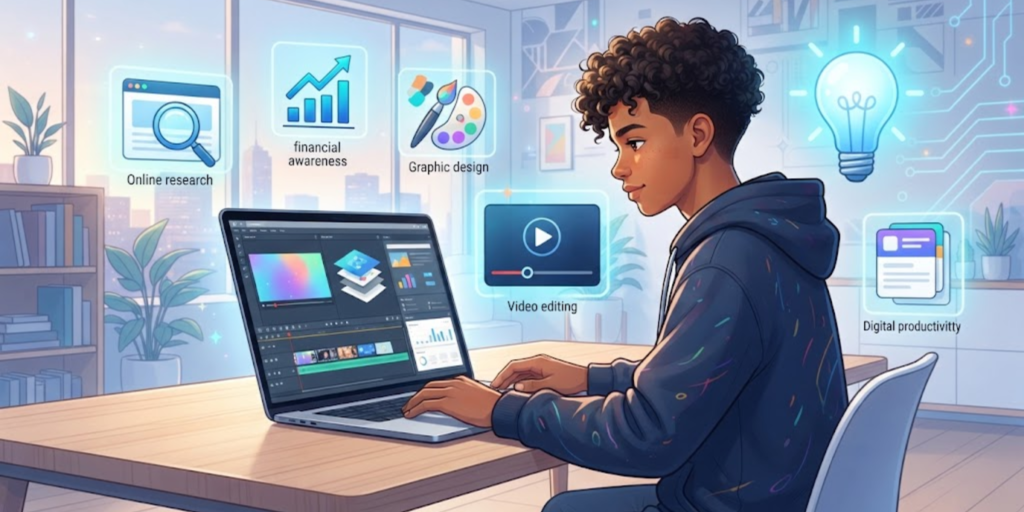
Teenagers can also benefit from learning basic money management.
You do not need advanced financial knowledge to begin. Start with simple concepts such as budgeting, saving, spending, and understanding digital payments.
Useful Money Skills to Learn
A teenager can practice:
- Creating a simple budget
- Tracking spending
- Setting savings goals
- Comparing prices before buying
- Understanding needs versus wants
- Recognizing suspicious payment requests
- Protecting financial information online
For example, if you receive a fixed amount of money each month, track where it goes. After a few weeks, you may notice patterns in your spending.
Digital money skills are especially useful because many purchases and payments now happen through websites and mobile apps.
The goal is not to become obsessed with money. It is to understand how everyday financial decisions work.
9. Creativity and Digital Content Creation
Technology has made it easier than ever to create digital content.
Teenagers can experiment with photography, graphic design, video editing, presentations, animation, writing, or website design.
Creativity is not limited to people who consider themselves artists. It also involves finding different ways to communicate ideas and solve problems.
Beginner Digital Projects
Try creating:
- A simple poster
- A short educational video
- A presentation
- A basic website
- A digital illustration
- A photo story
- A short animation
- A school project with original graphics
Start with a project that interests you. If you enjoy gaming, for example, you could create a guide or visual project around a game you like.
The purpose is not to make everything perfect. Instead, each project gives you an opportunity to practice planning, editing, communication, and creative thinking.
10. Adaptability and Continuous Learning
One of the most important skills for teenagers is learning how to keep learning.
Technology changes. Software gets updated. New tools appear. Some skills become more useful while others change.
Because of this, knowing how to learn is often more valuable than memorizing one specific tool.
How to Become a Better Learner
Try this process:
Choose one topic you genuinely want to understand.
Next, find a reliable beginner resource.
Then, learn the basic concepts.
After that, practice what you learned.
Finally, build a small project or solve a problem.
For example, you could start with basic Python concepts, build a small calculator, and then move toward a quiz game or another project.
You do not have to master a skill in one week. Progress becomes much easier when you focus on small improvements.
Which Skills Should Teenagers Learn First?
There is no single correct order for everyone.
Your interests should influence where you begin.
If you enjoy… | Consider learning… |
Computers | Coding and programming |
AI tools | AI literacy |
Social media | Digital safety and content creation |
School projects | Research and communication |
Games and technology | Coding and problem-solving |
Organizing tasks | Time management |
Creative projects | Digital content creation |
Understanding information | Research and information literacy |
You can also combine skills.
For example, learning coding can improve problem-solving. Creating a website can combine coding, research, communication, and creativity. Using AI for a project can also teach you how to check information and protect your privacy.
That is why you do not need to learn each skill separately.
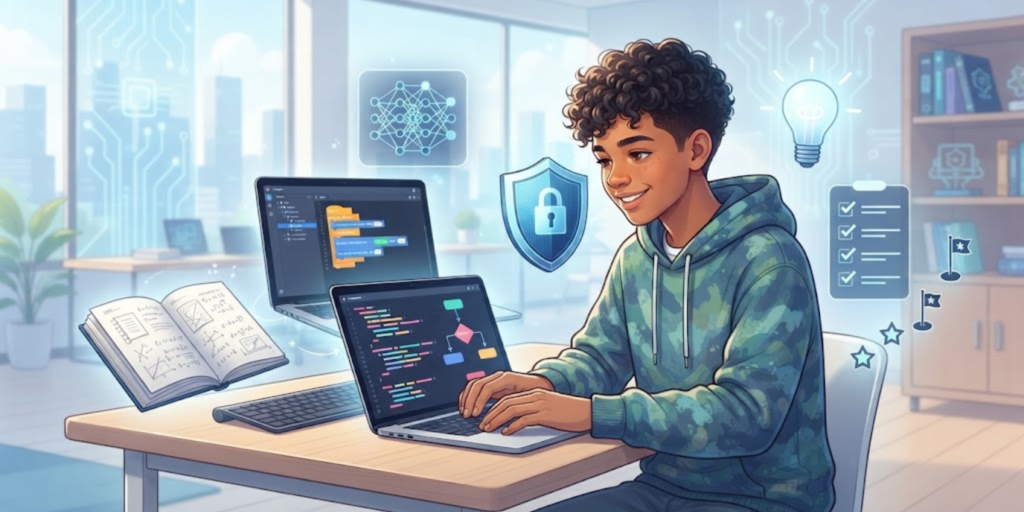
How to Start Learning These Skills
Trying to learn all 10 skills at once can quickly become overwhelming.
Instead, choose one primary skill and one smaller supporting skill.
For example:
- Coding + problem-solving
- AI + research
- Digital safety + privacy
- Communication + content creation
- Time management + study skills
Then give yourself a small project.
If you choose coding, build a calculator.
If you choose communication, prepare a short presentation.
If you choose digital safety, review the privacy and security settings on your accounts.
If you choose time management, create a simple weekly study plan.
Small projects turn learning from a vague goal into something you can actually see and measure.
Common Mistakes Teenagers Make When Learning New Skills
Learning becomes easier when you know what to avoid.
Trying to Learn Everything at Once
Jumping between coding, AI, video editing, cybersecurity, and several other subjects can make it difficult to build real progress.
Choose a small number of skills and give them enough time.
Only Watching Tutorials
Tutorials are useful, but watching someone else do something is different from doing it yourself.
After learning a concept, try to use it.
Expecting Immediate Results
Some skills take weeks or months to develop.
If your first project looks simple, that is completely fine. Your early projects are supposed to help you learn.
Comparing Your Progress With Others
Someone else may have started years before you.
Instead of comparing your progress with theirs, compare your current ability with where you were a few weeks ago.
Giving Up When Something Goes Wrong
Mistakes are part of learning.
A failed project, incorrect answer, or coding error can show you exactly what you need to improve next.
Frequently Asked Questions (FAQ)
1. What are the most useful skills for teenagers?
Useful skills include coding, AI literacy, digital safety, communication, problem-solving, time management, research, financial awareness, creativity, and adaptability.
2. Which skill should a teenager learn first?
Start with a skill that matches your interests. If you enjoy computers, coding may be a good starting point. If you enjoy creative work, digital content creation could be more motivating.
3. Is coding a good skill for teenagers?
Yes. Coding can help teenagers understand technology while developing logical thinking and problem-solving abilities. Beginners can start with simple programming projects.
4. Should teenagers learn AI?
Learning basic AI literacy can be useful. Teenagers should understand how AI tools work at a high level, how to write useful prompts, how to check AI-generated information, and why privacy matters.
5. How can teenagers learn new skills for free?
Many skills can be practiced using free tutorials, official documentation, educational websites, school resources, and small personal projects. The best approach is to combine learning with hands-on practice.
Conclusion
The best skills for teenagers are not necessarily the most complicated ones. Coding, AI literacy, digital safety, communication, problem-solving, time management, research, financial awareness, creativity, and adaptability can all provide useful foundations for school and everyday life.
You do not need to master all 10 immediately. Pick one skill that interests you, practice it regularly, and build small projects that turn knowledge into experience. Over time, those small steps can add up to a much stronger set of skills and greater confidence with technology and learning.