
Wired vs Wireless Headphones
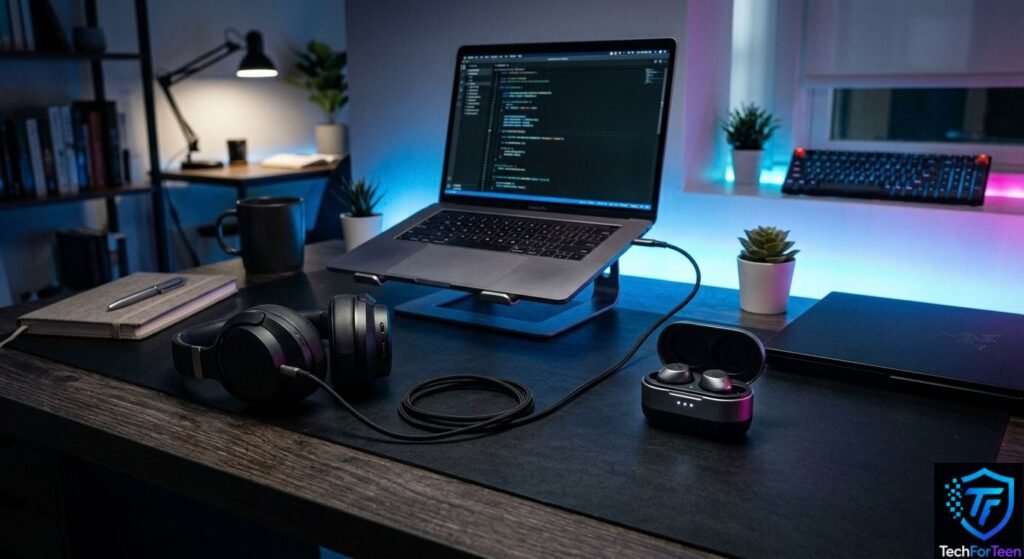
Choosing headphones for school, online classes, gaming, music, or studying can be confusing. The wired vs wireless headphones debate usually comes down to convenience, sound quality, battery life, price, and how you plan to use them. Wired headphones connect directly to a device, while wireless models usually use Bluetooth and need a battery. Both types can work well for students, but they have different strengths. In this guide, we will compare wired and wireless headphones in simple terms, look at their advantages and disadvantages, and explain which option may suit different student needs. You will also learn about comfort, connectivity, durability, gaming, and safe listening habits.
Wired vs Wireless Headphones: What Is the Difference?
The biggest difference is how the headphones connect to your device.
Wired headphones use a physical cable. Depending on the model and device, they may connect through a 3.5mm headphone jack, USB-C, or another compatible connector.
Wireless headphones connect without a cable, most commonly through Bluetooth. They contain a rechargeable battery that powers the wireless connection.
Both options have their own advantages, so the right choice depends on the student’s needs and daily use. The right choice depends on your budget, devices, daily routine, and personal preferences.
Wired Headphones for Students
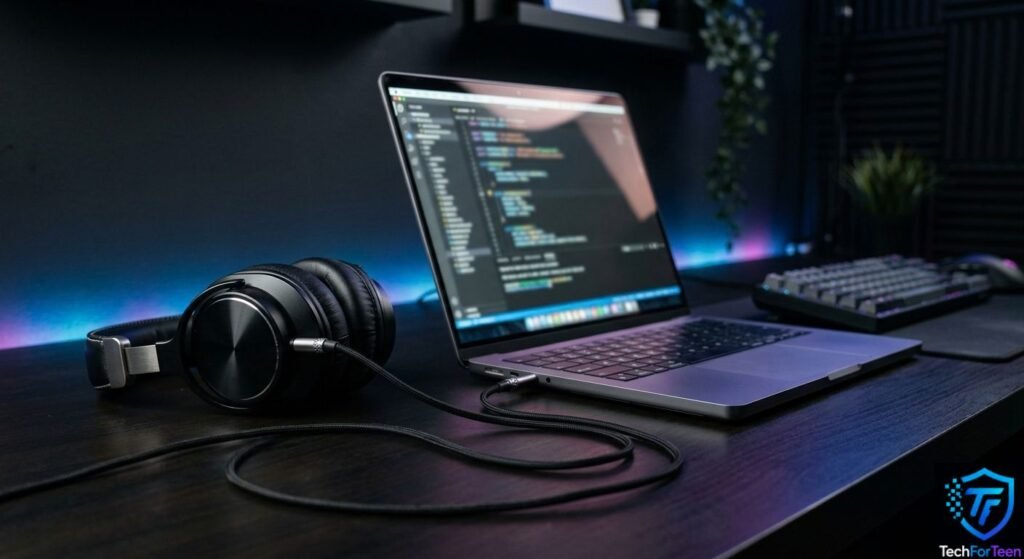
Wired headphones are still useful for students who want a simple connection without worrying about charging.
Advantages of Wired Headphones
- No battery charging: You can use them whenever your device supports the connector.
- Simple connection: Plug them in and start listening.
- Usually affordable: Basic wired models can be inexpensive.
- No Bluetooth pairing: There is no need to pair or reconnect the headphones.
- Good for long study sessions: You do not have to stop because the headphone battery is empty.
For example, a student who mainly uses headphones with a laptop for online classes may prefer a wired model because it can stay connected throughout a lesson.
However, wired headphones have one obvious disadvantage: the cable can get tangled or become uncomfortable while moving around.
Wireless Headphones for Students
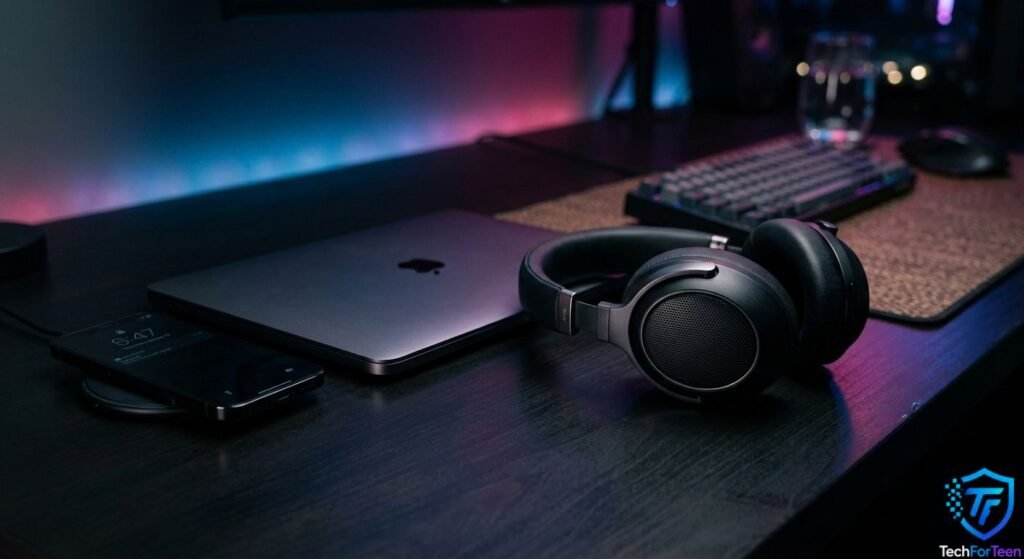
Wireless headphones are designed for students who prefer freedom from cables.
Advantages of Wireless Headphones
- No cable: They are convenient when walking around or traveling.
- Easy with modern devices: Many phones, tablets, and laptops support Bluetooth.
- Useful for multitasking: You can move around without pulling a cable from your device.
- Portable: Wireless headphones are often designed with carrying cases or folding parts.
- Convenient for everyday use: They can be useful for music, videos, calls, and online learning.
However, wireless headphones need regular charging to keep working. If the battery runs out before an important class or study session, you may need another way to listen.
Wired vs Wireless Headphones: Key Differences
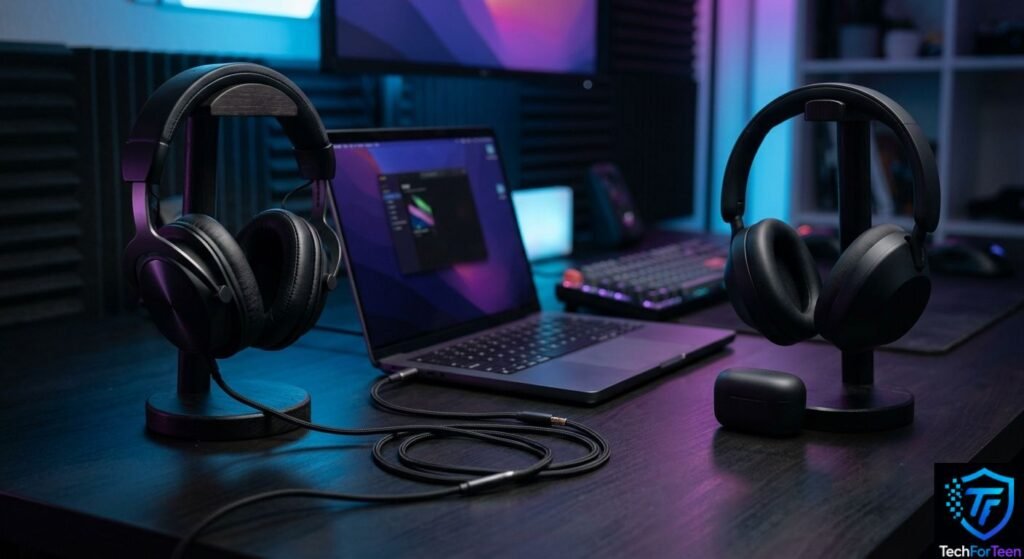
Feature | Wired Headphones | Wireless Headphones |
|---|---|---|
Connection | Cable | Bluetooth or another wireless connection |
Battery | Usually not required | Required |
Convenience | Simple but has a cable | More freedom of movement |
Charging | Not normally needed | Required |
Price | Often cheaper | Can cost more |
Portability | Cable can tangle | Usually easier to carry |
Compatibility | Depends on the port | Depends on Bluetooth/device support |
Gaming | Good for simple setups | Convenient, but wireless delay can vary |
Calls | Depends on model | Depends on model and connection |
The table shows why there is no single answer for every student. Your daily activities matter more than the label “wired” or “wireless.”
Which Is Better for Online Classes?
For online classes, both types can work well.
Wired headphones can be convenient because they do not depend on battery power. This can be useful if you have several classes in a row.
Wireless headphones are more convenient if you move around while attending classes. They can also reduce cable clutter around your desk.
If you spend many hours at a desk, your overall setup matters too. A comfortable laptop position can make studying easier, so you may also find our guide on finding the best laptop stand for students useful.
Which Is Better for Gaming?
For casual gaming, either type can work.
Wired headphones are often a straightforward choice because there is no wireless battery to manage. They can also be useful when you want a direct connection to a laptop or PC.
Wireless headphones can make gaming more comfortable because there is no cable across your desk. However, wireless performance can depend on the headset, connection, device, and game setup.
For competitive gaming, students should pay attention to audio delay and connection stability rather than choosing headphones simply because they are wireless.
Which Is Better for Studying?
For studying, comfort is more important than whether headphones are wired or wireless.
A wired pair may suit you if you normally sit at a desk and want something that is always ready to use. Wireless headphones may be better if you frequently move between your desk, classroom, library, or another study area.
Also consider the headphone design. Over-ear headphones may feel different from earbuds, so try to choose a comfortable fit that does not cause discomfort during longer sessions.
What About Price?
Price varies greatly between both types.
Basic wired headphones can be inexpensive because they do not need a rechargeable battery or wireless hardware. Wireless models can cost more, especially when they include features such as active noise cancellation, better microphones, or longer battery life.
However, a higher price does not automatically mean better headphones for every student.
If your budget is limited, our guide on what to look for in cheap headphones on a budget can help you understand which features are worth checking before buying.
What About Battery Life?
Battery life is one of the biggest differences between wired and wireless headphones.
Wired headphones generally do not need charging. This makes them useful as a backup option if your wireless headphones run out of power.
Wireless headphones need regular charging. Before buying a pair, check the manufacturer’s stated battery information and consider how often you expect to use them.
For students, this can be especially important if headphones are used for schoolwork, entertainment, and travel every day.
Do Headphones Affect Hearing Safety?
The type of connection is not the main issue when it comes to hearing safety. Volume and listening time matter much more.
The World Health Organization recommends keeping device volume below 60% of maximum and taking breaks from loud listening. It also recommends well-fitted or noise-cancelling headphones because they can reduce the need to increase volume in noisy environments. WHO’s safe-listening guidance provides more information about protecting your hearing.
For students, simple habits can help:
- Keep the volume at a comfortable level.
- Take regular breaks.
- Avoid turning the volume up to block surrounding noise.
- Give your ears quiet time between long listening sessions.
- Pay attention if you experience persistent ringing or difficulty hearing.
Can USB Accessories Help With Headphones?
Some students use USB-C headphones, adapters, microphones, or other accessories with laptops and phones. Before buying anything, check which ports your device actually has.
You can learn more about useful devices in our guide to USB accessories for teenagers.
Remember that a USB adapter does not automatically make every headphone compatible. The connector, device support, and operating system can all matter.
Wired vs Wireless Headphones: Which Should Students Choose?
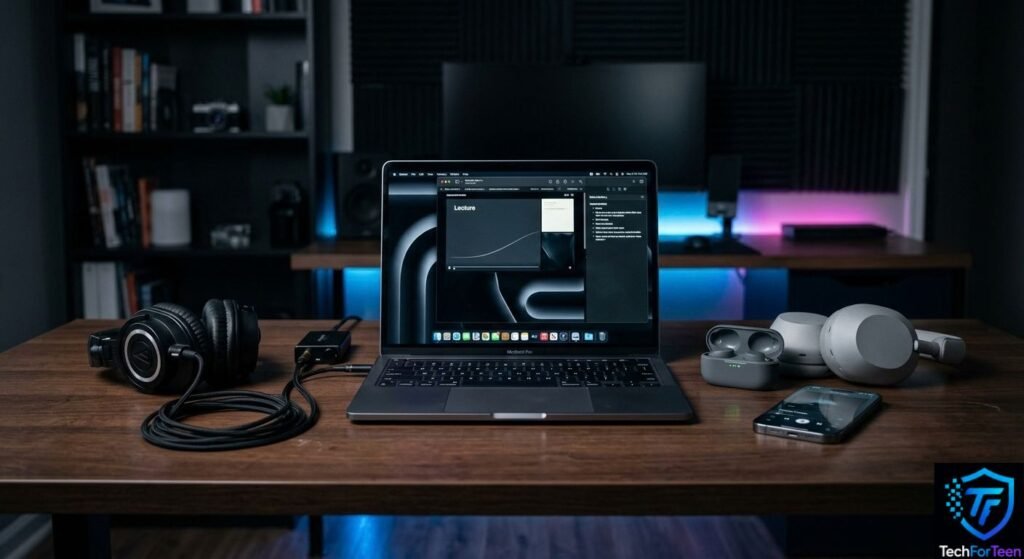
Choose wired headphones if you:
- Want a simple plug-and-play setup.
- Do not want to worry about charging.
- Mainly study at a desk.
- Have a compatible headphone port.
- Want to keep your budget lower.
Choose wireless headphones if you:
- Prefer freedom from cables.
- Move around frequently.
- Use Bluetooth devices regularly.
- Want a cleaner desk setup.
- Do not mind charging your headphones.
The most important thing is to match the headphones to your actual routine. A student who spends most of the day at a laptop may have different needs from someone who travels between school, home, and the library.
Frequently Asked Questions (FAQs)
1. Are wired headphones better than wireless headphones for students?
Not necessarily. Wired headphones are convenient because they usually do not need charging, while wireless headphones offer more freedom of movement.
2. Are wireless headphones good for online classes?
Yes. They can be useful for online classes, especially when you want to move around. However, remember to keep them charged.
3. Do wired headphones have better sound quality?
A wired connection can provide a direct audio connection, but sound quality depends on the headphones, device, audio source, and other factors. Wireless headphones can also provide good sound quality.
4. Which headphones are cheaper for students?
Basic wired headphones are often cheaper, although prices vary widely. Wireless headphones are available at different price levels as well.
5. Do wireless headphones need Wi-Fi?
No. Bluetooth headphones normally connect directly to a compatible device and do not require Wi-Fi for the headphone connection.
6. Are wireless headphones safe for your ears?
Wireless technology itself is not the main hearing-safety concern. Listening too loudly or for too long can increase the risk of hearing damage, so safe volume and listening breaks are important.
Conclusion
The choice between wired vs wireless headphones depends on how you study, travel, play games, and use your devices. Wired headphones are simple, do not normally need charging, and can be a practical budget choice. Wireless headphones provide more freedom and convenience but require battery charging.
For most students, the best option is the one that fits their daily routine, devices, budget, and comfort needs. Whatever type you choose, remember that safe listening habits are just as important as the headphones themselves.