
How to Start Learning Cybersecurity as a Beginner

Learning how to start learning cybersecurity can feel confusing when you see terms like ethical hacking, networks, malware, encryption, and penetration testing. The good news is that you do not need to know everything before you begin. Cybersecurity is a broad field, so beginners can start with basic computer skills, internet safety, networking, and problem-solving. As you learn, you can slowly explore areas that interest you, such as security testing, digital forensics, or protecting websites and accounts. This guide explains a simple path for students and teenagers who want to learn cybersecurity without jumping into advanced topics too quickly.
What Is Cybersecurity?
Cybersecurity is the practice of protecting computers, networks, accounts, software, and data from unauthorized access, damage, or misuse.
For example, using a strong password, enabling multifactor authentication, or keeping your laptop updated are all basic cybersecurity habits.
However, cybersecurity goes beyond personal online safety. Professionals may protect company networks, investigate security incidents, test software, monitor suspicious activity, or help organizations reduce security risks.
The field also includes many different career roles. NIST’s NICE Framework describes cybersecurity work through tasks, knowledge, skills, work roles, and competency areas. This helps learners understand that cybersecurity is a broad field and is not simply about becoming a “hacker.”
Build Basic Computer Skills First
Before learning advanced cybersecurity, make sure you understand how computers work.
You should become comfortable with:
- Files and folders
- Operating systems
- Software installation
- Web browsers
- Basic troubleshooting
- Command-line basics
- User accounts and permissions
- File extensions
- Basic computer hardware
If these topics are still new, take your time. Strong computer basics make later cybersecurity concepts much easier.
You can also build your general technology knowledge by exploring 10 technology skills worth learning for teens.
Learn Networking Basics

Networking is one of the most useful foundations for cybersecurity.
A network connects devices so they can communicate. Your home Wi-Fi network, for example, allows your phone, laptop, and other devices to communicate with a router and access online services.
Start by learning what these terms mean:
- IP address
- Router
- DNS
- HTTP and HTTPS
- TCP and UDP
- Ports
- Client and server
- Local network
- Firewall
You do not need to memorize everything immediately. Focus on understanding what each concept does and how the pieces work together.
For example, when you visit a website, your device communicates with other systems across a network. Understanding that process gives you a better foundation for learning how security problems can occur.
Learn Linux and the Command Line

Linux is widely used in technology and cybersecurity learning. You do not need to become a Linux expert at the beginning, but learning basic commands can be very useful.
Start with simple tasks such as:
- Moving between folders.
- Creating and deleting files in a safe practice environment.
- Viewing files and directories.
- Understanding permissions.
- Running simple commands.
- Reading basic system information.
The command line may look strange at first. After some practice, however, it can become a useful way to understand how an operating system works.
Always practice on your own computer, a learning platform, or another environment where you have permission. Cybersecurity skills should be used responsibly.
Learn Basic Programming
You do not have to be an expert programmer to begin cybersecurity.
Still, learning programming helps you understand how software works and can make security concepts easier to explore later.
Python is a useful beginner-friendly language because it can help you work with files, data, simple automation, and basic programs.
You can start with:
- Variables
- Conditions
- Loops
- Functions
- Lists and dictionaries
- Reading files
- Basic error handling
Programming also improves problem-solving. Instead of only memorizing commands, you begin thinking about how a computer follows instructions.
If you want to develop broader skills alongside cybersecurity, you can explore 10 skills for teenagers that are worth learning.
Learn Important Cybersecurity Concepts
Once your computer, networking, and programming basics are improving, begin learning core cybersecurity ideas.
Some important concepts include:
Authentication
Authentication checks whether someone is really the person they claim to be. Passwords, authentication apps, and biometric methods can all be used as authentication factors.
Authorization
Authorization determines what an authenticated user is allowed to access or change.
Encryption
Encryption changes readable information into a protected form so unauthorized people cannot easily understand it.
Malware
Malware is harmful software designed to perform unwanted or damaging actions. Common categories include viruses, worms, trojans, and ransomware.
Phishing
Phishing uses deceptive messages or websites to trick people into revealing information, opening harmful content, or taking another unsafe action.
CISA recommends learning to recognize phishing, using strong passwords, enabling MFA, and keeping software updated as basic online safety practices.
Practice Cybersecurity Safely
Reading about cybersecurity is useful, but practical learning helps you understand concepts more deeply.
The important rule is to practice only in systems you own or have clear permission to test.
Safe practice can include:
- Building a small virtual lab.
- Using intentionally vulnerable training environments.
- Solving beginner cybersecurity challenges.
- Practicing Linux commands.
- Studying sample logs.
- Learning how common security tools work.
- Writing simple Python programs.
- Testing your own small projects.
Do not scan, attack, break into, or test someone else’s computer, website, account, or network without permission.
A safe learning environment lets you experiment without putting another person’s data or system at risk.
Choose a Cybersecurity Area
Cybersecurity has many paths, so you do not need to learn everything.
As you gain basic knowledge, think about what interests you most.
You might explore:
- Network security: Protecting networks and connected systems.
- Web security: Understanding security problems in websites and web applications.
- Digital forensics: Examining digital evidence after an incident.
- Security operations: Monitoring systems and responding to suspicious activity.
- Cloud security: Protecting cloud-based systems and services.
- Application security: Helping developers build safer software.
- Governance and risk: Managing security policies, risks, and requirements.
NIST’s cybersecurity framework resources can help students explore different work roles and identify the knowledge and skills connected with them.
Create Small Cybersecurity Projects
Projects can turn your knowledge into something you can actually demonstrate.
For example, a beginner could create:
- A password-strength checker for learning purposes.
- A Python program that organizes security-related log data.
- A simple network diagram.
- A personal cybersecurity checklist.
- A small website with secure login concepts explained.
- A presentation explaining phishing and MFA.
- A safe virtual lab for learning Linux commands.
Keep projects simple at first. The goal is to understand what you are doing rather than collecting complicated tools.
Students can also strengthen their general study and career skills with 10 essential skills for students to succeed.
Build a Simple Cybersecurity Learning Roadmap
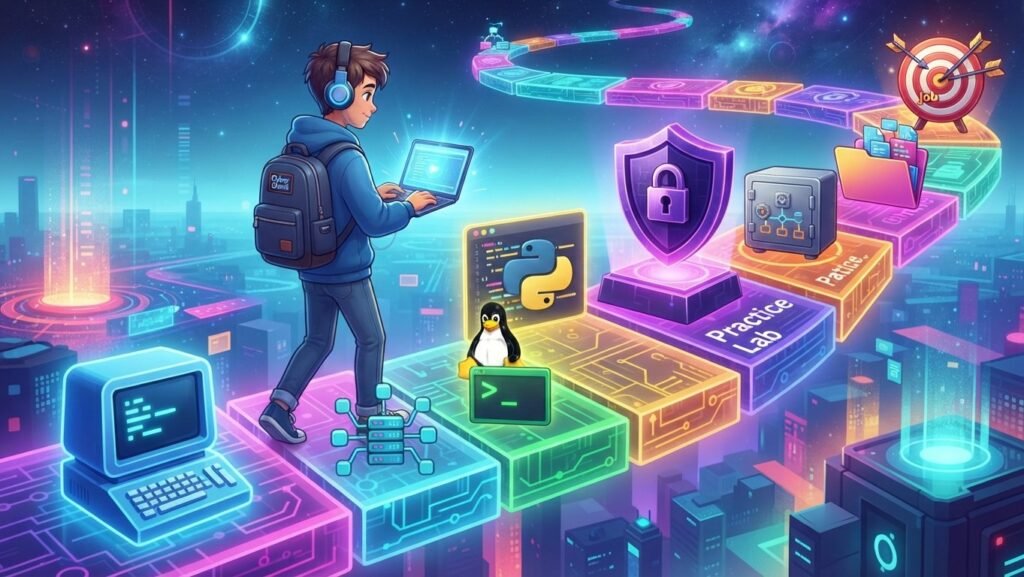
If you are unsure where to begin, follow this order:
Step 1: Learn computer basics.
Step 2: Understand operating systems.
Step 3: Learn networking fundamentals.
Step 4: Practice basic Linux commands.
Step 5: Learn beginner Python.
Step 6: Study cybersecurity concepts.
Step 7: Practice in safe learning environments.
Step 8: Choose an area that interests you.
Step 9: Build small projects.
Step 10: Keep learning and improving.
You do not have to complete these steps quickly. Consistent practice is more useful than trying to learn everything in a few days.
Common Mistakes Beginners Should Avoid
Many beginners make cybersecurity harder than it needs to be.
Avoid these mistakes:
- Trying to learn advanced hacking before learning networking.
- Memorizing commands without understanding them.
- Using random tools without knowing what they do.
- Practicing against systems without permission.
- Ignoring computer fundamentals.
- Believing every cybersecurity video or post online.
- Focusing only on certificates instead of practical skills.
- Giving up because technical concepts seem difficult at first.
Instead, learn one concept, practice it safely, and then move to the next.
Is Cybersecurity a Good Skill for Students?
Cybersecurity can help students develop technical knowledge, problem-solving, attention to detail, and logical thinking.
It can also introduce students to different technology careers. NIST’s learner resources specifically include materials for students and people exploring cybersecurity careers.
However, cybersecurity is not only about technical skills. Communication, teamwork, writing, research, and critical thinking can also be useful.
Most importantly, students should treat cybersecurity as a responsible skill. Learning how systems work should go together with learning how to protect them.
Frequently Asked Questions (FAQ)
1. How can I start learning cybersecurity with no experience?
Start with computer basics, networking, Linux, and simple programming. Then learn core cybersecurity concepts and practice in safe training environments.
2. Do I need to know coding to learn cybersecurity?
No. You can begin without coding. However, learning Python or another programming language can become very useful as your skills grow.
3. Is Linux necessary for cybersecurity?
Linux is not the only operating system used in cybersecurity, but learning basic Linux commands can be very helpful for beginners.
4. Can teenagers learn cybersecurity?
Yes. Teenagers can learn cybersecurity through age-appropriate courses, educational resources, programming, networking lessons, and safe practice environments.
5. How long does it take to learn cybersecurity?
There is no single timeline. Cybersecurity covers many areas, so learning is an ongoing process. Start with fundamentals and build your skills gradually.
6. Should I learn ethical hacking first?
Not necessarily. Networking, operating systems, programming, and security fundamentals provide a stronger foundation before moving into more advanced security testing.
7. Can cybersecurity become a career?
Yes. Cybersecurity includes many different work roles involving protection, investigation, development, operations, governance, and other areas. Your interests and skills can help you decide which path to explore.
Conclusion
Knowing how to start learning cybersecurity is mainly about building the right foundation. Begin with computers and networking, add Linux and programming, then explore cybersecurity concepts and safe practical projects. You do not need to master everything at once. Take one step at a time, practice responsibly, and keep building your skills. Over time, you can explore different cybersecurity areas and discover which part of the field interests you most.