
Top Job Skills for Students to Prepare for the Jobs
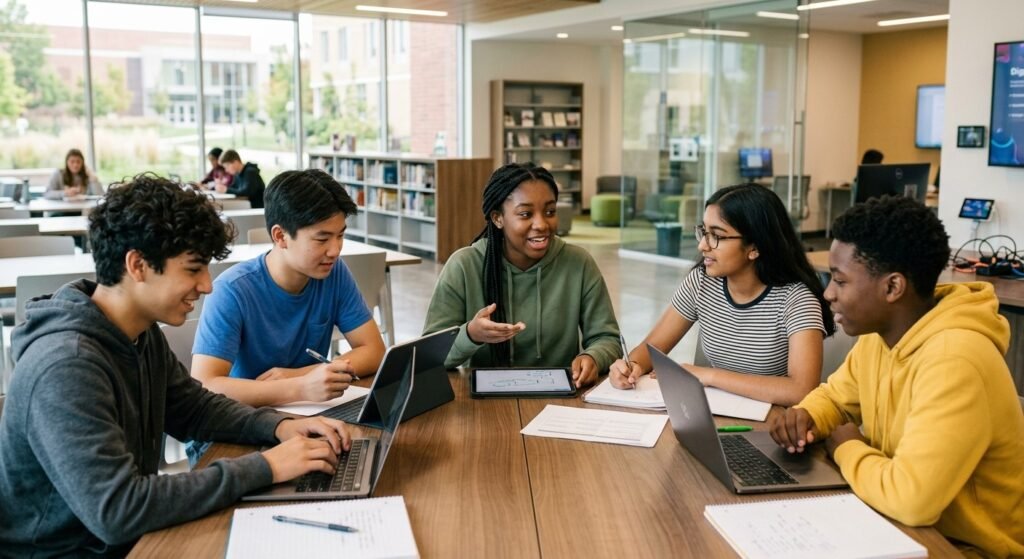
The future of work is changing, but students do not need to predict exactly which career they will choose. Building useful job skills for students can prepare them for opportunities in technology, business, creative work, and many other fields. The goal is to develop a mix of digital knowledge and human abilities. Students who can communicate, solve problems, use technology responsibly, work with others, and keep learning can adapt as workplaces change. This guide explores practical skills students can develop through schoolwork and personal projects.
Why Job Skills Matter for Students
Good grades and subject knowledge are valuable, but careers also require practical abilities. Employers need people who can apply knowledge, handle problems, communicate ideas, and learn new tools.
The World Economic Forum’s Future of Jobs Report 2025 says employers expect 39% of workers’ existing skill sets to change by 2030. It also highlights technological skills alongside analytical thinking, creative thinking, resilience, flexibility, and curiosity.
World Economic Forum’s Future of Jobs Report 2025
This shows why students can benefit from learning both technical and human skills.
1. Digital Literacy
Digital literacy is one of the most useful job skills for students because technology is part of almost every modern workplace.
Students should know how to use common productivity tools, organize digital files, search for reliable information, collaborate online, and learn unfamiliar software. Digital literacy is more than knowing how to use a phone; it means choosing the right tool for a task and using it safely.
2. AI Literacy
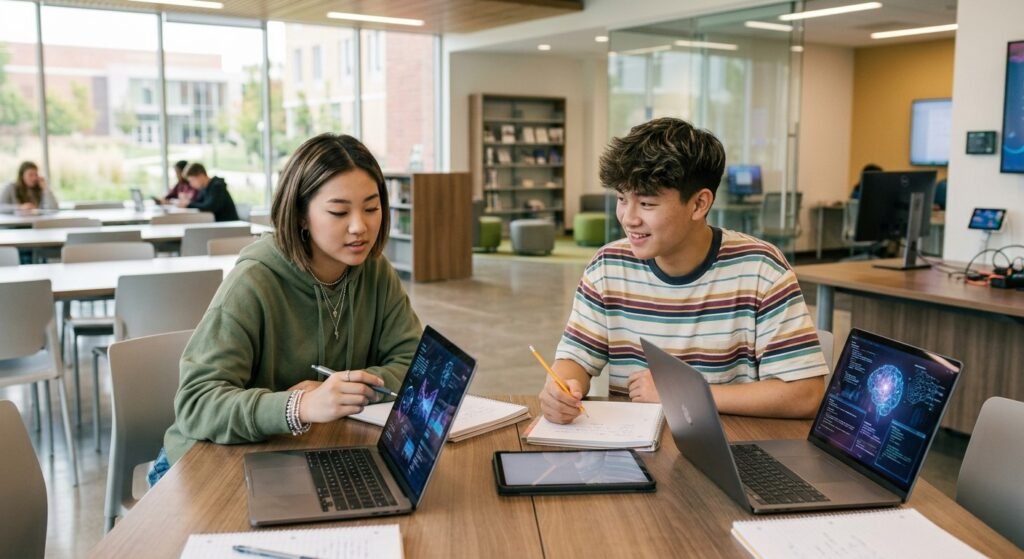
Artificial intelligence is becoming part of many workplaces, so students should understand how to use AI tools responsibly.
AI literacy includes knowing what AI can do, recognizing its limitations, checking generated information, and understanding basic ideas such as prompts, data, and automation.
Students can use AI to brainstorm project ideas, explain difficult concepts, create practice questions, or improve a first draft. However, they should check important information instead of assuming every AI response is correct.
For structured practice, IBM SkillsBuild’s free student learning resources include AI, data, cybersecurity, and other career-focused skills.
3. Communication Skills
Strong communication can help in almost every career. It includes speaking clearly, writing understandable messages, listening carefully, and explaining ideas to different audiences.
A programmer may explain a technical problem to a client. A designer may present a project, while a business student may write a professional email.
Students can improve communication through presentations, debates, group projects, and classroom discussions.
4. Critical Thinking and Problem-Solving
Technology can provide information quickly, but students still need to decide whether information makes sense and how to use it.
Critical thinking means examining information before accepting it. Problem-solving means breaking a difficult situation into smaller parts and finding a practical solution.
A simple method is to identify the problem, gather information, consider possible solutions, compare them, test one, and learn from the result.
These abilities can help across many fields.
5. Coding and Technical Skills
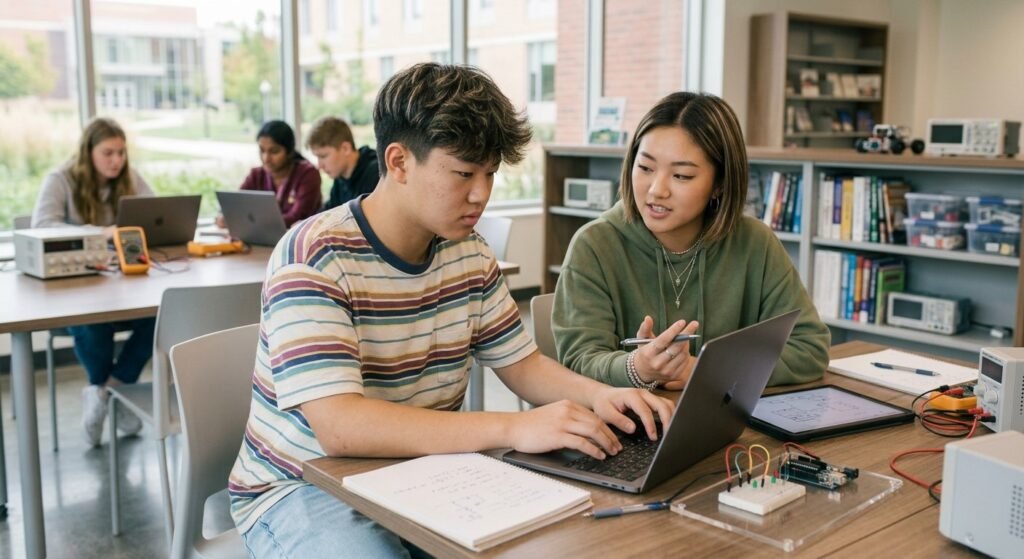
Not every student needs to become a programmer. Still, basic coding can help students understand technology and develop structured thinking.
Beginners can explore HTML and CSS for web development or Python for general programming. Small projects are especially useful because students solve real problems while building something.
Students interested in web careers can read this guide on how to become a web developer to understand the skills and learning path involved.
Coding also teaches students to break large tasks into smaller steps. That approach can be useful even outside programming.
6. Creativity
Creativity is not only about art. It also means finding new approaches, generating ideas, and looking at problems from different angles.
Students can develop creativity by designing websites, making presentations, creating videos, writing, building projects, or trying different solutions to school assignments.
The World Economic Forum identifies creative thinking as an important skill for the changing workplace. Therefore, students should not treat creativity as separate from technology. In many careers, the two can work together.
7. Teamwork and Collaboration
Many jobs involve working with other people. Students can develop teamwork through school projects and extracurricular activities.
Good collaboration includes listening to others, sharing responsibilities, meeting deadlines, giving useful feedback, and handling disagreements respectfully.
For example, a group creating a website might divide tasks between research, writing, design, and coding, while still communicating about the final result.
8. Adaptability and Lifelong Learning
A useful future skill is learning. Software, AI tools, workplace systems, and job requirements can change, so students may need to learn unfamiliar tools throughout their careers.
The World Economic Forum also highlights resilience, flexibility, agility, and curiosity as important skills for the changing workplace.
Students can build adaptability by trying unfamiliar subjects, learning from mistakes, taking short courses, and working outside their comfort zone.
How Students Can Build These Skills
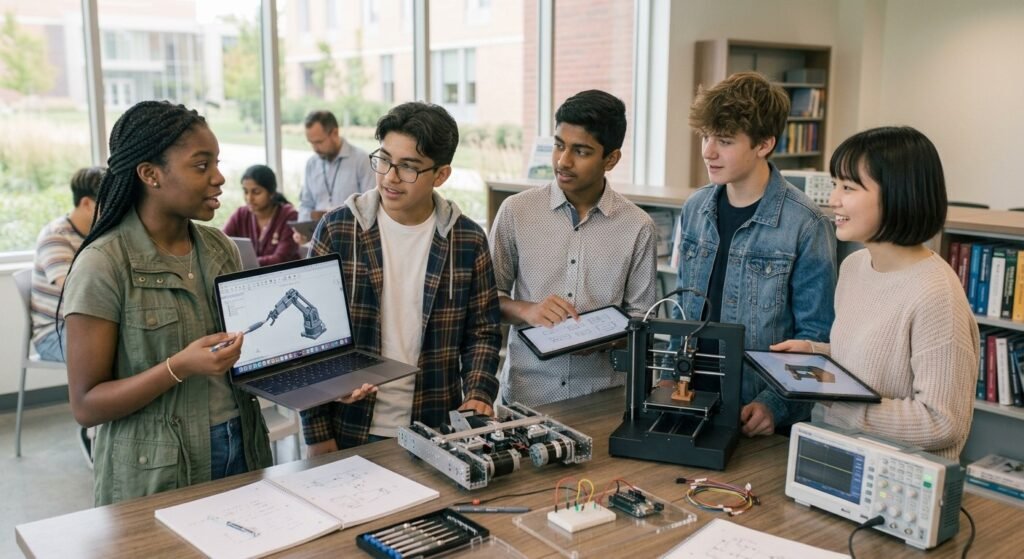
Students do not need to master everything. A better approach is to choose two or three skills and practice them through real projects.
For example, a student interested in technology could build a simple webpage. They might learn HTML and CSS, use AI for brainstorming, solve coding problems, explain the project, and improve the design after feedback. One project can develop several skills at once.
See skills teenagers need for future jobs for more ideas.
How to Choose the Right Skills
The right skills depend on a student’s interests and goals. Someone interested in software may focus on coding, AI, and problem-solving. A future designer might combine creativity with digital tools. A student interested in business could focus on communication, teamwork, data, and organization.
It is also useful to combine technical and human skills. Coding plus communication can help a developer explain ideas, while AI literacy plus critical thinking supports responsible technology use.
Students can also learn through projects, clubs, competitions, volunteering, and online courses. For another perspective on technology careers, see whether web design is still in demand.
Frequently Asked Questions (FAQ)
1. What are the most important job skills for students?
Useful skills include digital literacy, AI literacy, communication, critical thinking, problem-solving, creativity, teamwork, and adaptability.
2. Do students need coding skills for future jobs?
Not every career requires coding. However, basic programming can improve technical understanding and structured problem-solving.
3. Why is AI literacy important for students?
AI is increasingly used in workplaces. Students should understand its capabilities and limitations and learn to check AI-generated information.
4. How can students build job skills without having a job?
They can use school projects, personal projects, clubs, competitions, presentations, volunteering, and online learning to practice practical skills.
5. Should students learn technical or soft skills?
Both are useful. Technical skills help students work with tools and systems, while communication, creativity, teamwork, and adaptability help them apply those skills effectively.
Conclusion
The future of work will continue to change, but students do not need to know exactly what their careers will look like. Building strong job skills for students can give them a flexible foundation for different opportunities.
Start with skills that match your interests, then practice them through real projects. Learn technology, but also develop communication, creativity, critical thinking, teamwork, and adaptability. Most importantly, stay curious and keep learning.